


Views: 0 Author: Site Editor Publish Time: 2026-11-26 Origin: Site


Selecting the right connection method for a telecom monopole tower is a critical engineering and procurement decision. It directly impacts installation logistics, long-term maintenance, and overall project viability. Both slip joints and flanged connections safely support heavy telecommunication payloads. However, their differing mechanics dictate specific use cases based on site access, local zoning laws, and budget constraints. Project managers must evaluate these variables carefully before construction begins. Choosing incorrectly can trigger frustrating installation delays or unexpected regulatory roadblocks. This guide breaks down the structural realities, hidden expenses, and operational trade-offs of both connection types. We provide actionable insights to help project managers and engineers specify the optimal design for their next deployment. You will learn the physics behind each method and evaluate field realities to guide your decision-making process.
Installation Logistics: Slip joints require precise jacking equipment and careful alignment, whereas flange connections rely on standard torque-wrench bolting, impacting crane time and labor costs.
Aesthetics & Zoning: Slip joints offer a seamless, streamlined profile often favored by strict municipal zoning boards, while flanges create visible external ridges.
Maintenance: Flanged connections demand periodic bolt tension inspections to maintain structural integrity under wind loads; slip joints are generally maintenance-free once seated.
Manufacturing Tolerances: The reliability of a slip joint is highly dependent on tight fabrication tolerances and high-quality Hot Dip Galvanizing (HDG) to prevent binding during assembly.
Slip joints rely heavily on the physics of friction. They use a friction-fit design to secure sections together. During assembly, the upper tower section slides over the lower section. It typically overlaps by a length equal to 1.5 times the tower diameter at that junction. Gravity helps seat the sections initially. However, achieving a permanent, secure lock requires massive mechanical force.
Installation crews use specialized hydraulic jacking equipment to pull the sections tightly together. This jacking force overcomes initial friction. It forces the two tapered steel sections to wedge against each other. Once properly seated, the sheer surface area contact creates an incredibly strong bond. Tight manufacturing tolerances are absolutely vital here. If the tapers do not match perfectly, the joint will fail to achieve full contact. This reduces structural integrity. It can also leave unsightly gaps. You must rely on precise fabrication to guarantee a safe installation.
Flange connections use a traditional bolted plate methodology. Manufacturers weld heavy steel rings to the ends of each tower section. These flanges can sit internally or externally. Crews stack the sections and bolt these plates together. High-strength structural bolts handle the load distribution across the joint.
These bolts must withstand immense forces. They primarily bear shear loads and tension loads. Shear forces try to slide the plates apart laterally. Tension forces try to pull the plates away from each other vertically. The tower deflects constantly under wind loads. This movement introduces cyclic loading on the bolts. Engineers must strictly follow compliance realities regarding bolt fatigue. They specify exact torque requirements to ensure the joint remains secure over decades of continuous vibration.
Crane holding time significantly influences installation budgets. Slip joints often require longer crane holding times per section. The crane must support the upper section while crews attach hydraulic rams. The jacking process requires careful alignment and incremental pulling. This process takes time. It also demands specialized hydraulic jacking equipment. Not all local contractors carry this gear.
Flanged connections typically install much faster on-site. The crane lowers the section into place. Crews quickly align the bolt holes using spud wrenches. They drop bolts into place and secure them loosely. The crane can then release the load and move on. Crews follow up later using standard heavy-duty torque wrenches to achieve the final tension. This speeds up expensive crane usage.
Maintenance needs differ vastly between the two systems. Slip joints offer a distinct "set it and forget it" advantage. Once properly seated, the friction lock effectively fuses the sections together. Environmental exposure and structural settling make the bond even tighter over time. They require virtually zero joint maintenance.
Flanged towers demand ongoing labor. You must perform mandatory annual bolt torque checks. Crews must also inspect the bolts after severe storm events. Vibrations from wind loading can cause nuts to back off slightly. This loosens the connection and compromises structural safety. You must factor these continuous inspection routines into your operational planning.
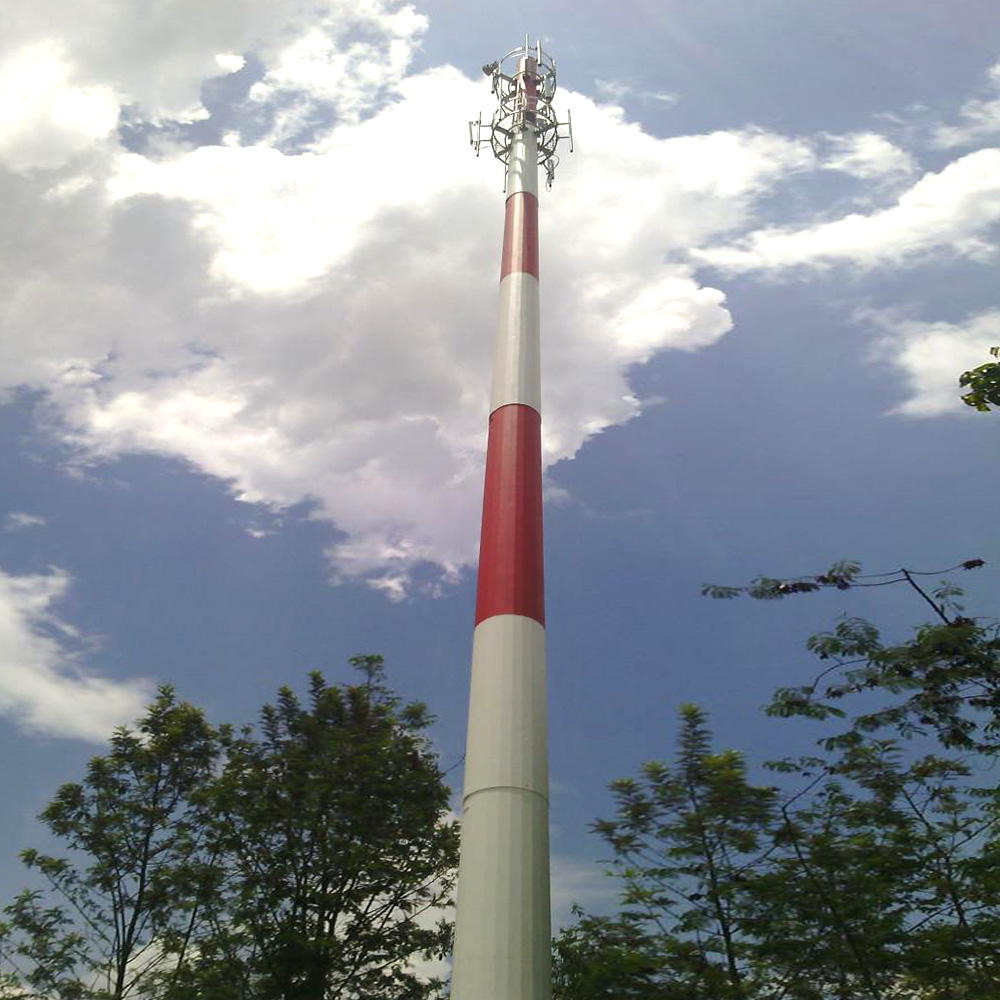
Zoning boards scrutinize the visual impact of new telecom structures. The aesthetic debate heavily favors slip joints. Slip joints create a continuous, smooth profile. They look seamless from the ground. This streamlined appearance helps towers blend into their surroundings.
Urban or heavily regulated residential areas often mandate this smooth profile. Flanges create visible, bulky external ridges at every connection point. These ridges break up the visual line of the pole. Zoning officials frequently reject flanged designs in sensitive municipal locations. You should always review local aesthetics ordinances before specifying a connection type.
You must consider the future lifecycle of the site. Slip joints are nearly impossible to dismantle cleanly. Years of environmental exposure cause cold welding between the steel surfaces. The friction lock becomes permanent. You usually have to cut a slip joint pole down to remove it.
Flanges stand out as the superior choice for temporary installations. They also excel on sites expecting future structural modifications. If you need to add a height extension later, crews can simply unbolt the top plate and attach a new section. Flanges offer unmatched flexibility for dynamic network deployments.
Feature | Slip Joint | Flange Connection |
|---|---|---|
Installation Speed | Slower (requires jacking alignment) | Faster (quick bolt drop-in) |
Equipment Required | Hydraulic jacking rams | Standard torque wrenches |
Maintenance Needs | Zero maintenance | Periodic torque checks required |
Visual Profile | Smooth, seamless | Visible external ridges |
Disassembly | Extremely difficult | Easy and modular |
Hot Dip Galvanizing (HDG) protects steel from corrosion. However, it introduces significant risks for slip joints. The HDG process involves dipping steel into molten zinc. Zinc buildup can occur inside the female section or on the male section. If manufacturers do not strictly control this zinc thickness, problems arise on site.
Excess zinc changes the dimensional tolerances. The sections can bind prematurely during assembly. Industry professionals call this a "hang up". The joint gets stuck before reaching the required overlap length. Crews must then lower the section and grind away the excess zinc. This destroys the protective coating. It also causes massive project delays. You must insist on factory test-fitting to avoid this risk.
Flanged connections carry their own specific risks. Supply chain reliability is paramount. Sourcing sub-standard bolts introduces severe engineering risks. Cheap bolts may shear under high wind loads. They might also suffer from accelerated fatigue.
Improper torque application poses an equally dangerous risk. If crews under-tighten the bolts, the joint will vibrate and eventually fail. If they over-tighten them, the bolts can yield and snap. You must ensure crews use calibrated equipment. They must document their torque values carefully to prevent catastrophic joint failure.
Shipping efficiencies impact project budgets directly. Slip joint sections often provide a distinct advantage here. Depending on their diameter, you can sometimes nest slip joint sections inside one another. Smaller upper sections slide inside larger lower sections. This nesting reduces the total shipping volume. You can fit more tower components onto a single flatbed truck.
Flanged sections are inherently bulky. The protruding flange plates prevent nesting entirely. They take up more physical space during transport. This limitation often increases freight logistics planning. It can also demand more trucks per site deployment.
Certain environments heavily favor the slip joint method. You should specify a Customizable HDG Steel Self-Supporting Telecom Tower with slip joints for strict urban environments. Municipalities often reject anything but a smooth aesthetic profile. Slip joints satisfy these strict visual zoning laws effortlessly.
They also suit projects prioritizing zero-maintenance connections. A telecom asset usually has a 30+ year lifespan. Eliminating annual bolt inspections saves countless labor hours. You should also choose them for permanent installations requiring rapid deployment, provided you have skilled jacking crews available. Experienced crews can pull slip joints together quickly and safely.
The strategic advantage of slip joints lies in long-term reliability. The ROI becomes apparent over decades of service. Reduced maintenance hours offset the potentially higher initial fabrication precision required. You eliminate the liability of loose bolts. You secure a permanent structural bond. The slightly slower installation phase pays dividends by removing future inspection burdens from your operational budget.
Flanged connections excel in distinctly different scenarios. You should deploy a flanged Monopole Tower in remote or difficult-to-access sites. Transporting specialized hydraulic jacking equipment across rough terrain is often cost-prohibitive. Sometimes it is physically impossible. Flanges eliminate this logistical nightmare.
They also make sense when relying on local contractors. Many general contractors are highly proficient in structural bolting. They understand torque specifications perfectly. However, they may lack slip-joint jacking experience. Flanges keep the installation process familiar. Finally, specify flanges for temporary telecom deployments. Modular sites expecting future structural modifications heavily rely on the unbolting capability of flanges.
Predictability drives the strategic advantage of flanged towers. Crane operators and ground crews understand bolted connections intuitively. The installation speed remains highly predictable. Furthermore, the flexibility of disassembly provides massive value. You can relocate the asset easily. You can upgrade the tower height without ordering a completely new structure. This modularity protects your initial asset investment.
Your supplier choice dictates the success of the installation. Look for manufacturers who document their quality assurance rigorously. They must control HDG thickness meticulously. This is especially vital for slip joints to prevent on-site binding. Demand suppliers who perform full pre-assembly testing at the factory. They should physically test-fit slip joints before shipping them to your site.
Never compromise on engineering compliance. Ensure the supplier strictly adheres to EIA/TIA-222 standards. These standards govern wind and ice loading calculations for steel antenna towers. The supplier must calculate these loads accurately regardless of the connection type. Ask for their engineering stamps and structural analysis reports upfront.
Evaluate the manufacturer's ability to provide tailored solutions. Your site has specific payload requirements. The manufacturer should balance these exact payload needs against the most efficient connection strategy. They must have the engineering depth to recommend the right design rather than pushing a one-size-fits-all product.
Define strict criteria before requesting a technical bid. Use this checklist to hold suppliers accountable:
Demand comprehensive load calculation sheets based on local environmental data.
Request official galvanizing certifications matching ASTM standards.
Require detailed assembly manuals outlining jacking pressures or bolt torque values.
Ask for documented proof of factory test-fitting protocols.
Selecting the optimal connection method dictates the long-term success of your telecom site. Neither connection type is universally superior. A slip joint offers a flawless aesthetic profile and zero maintenance. However, it requires precise fabrication and specialized installation gear. A flanged connection provides rapid, predictable installation and modular flexibility. Yet, it demands ongoing inspections and creates a bulkier visual footprint.
Your choice hinges on balancing installation capabilities, operational maintenance limitations, and local zoning requirements. Project leaders must consult with their structural engineers early in the design phase. You should engage your chosen manufacturer during site planning. Aligning the connection type with the specific logistical realities of your deployment site ensures a safe, efficient, and highly reliable network build.
A: Technically yes, but practically very difficult. Cold welding, intense friction, and environmental settling fuse the steel sections together over time. Crews usually have to cut the tower to remove it. We do not recommend slip joints for temporary sites.
A: No. When engineered to strict EIA/TIA-222 standards and properly torqued, flanged connections offer equivalent structural integrity to slip joints. They safely support identical heavy telecommunication payloads.
A: This commonly happens due to excessive galvanizing buildup, inadequate jacking force, or dimensional distortion during manufacturing. You must emphasize the need for factory test-fitting to prevent these frustrating field delays.
A: Marginally. While flanges do increase the surface area slightly, engineers account for this additional drag during the initial structural calculations. The tower easily withstands the required wind speeds.


