


Views: 0 Author: Site Editor Publish Time: 2026-10-11 Origin: Site


Connecting sections remains the most critical phase of vertical infrastructure construction. It directly dictates crane time, labor requirements, and long-term structural integrity. Engineers and procurement teams must constantly evaluate their connection methods. They often choose between traditional bolted flange configurations and friction-fit slip joints. The wrong choice easily leads to massive project delays. It can also cause mismatched installation equipment or demanding lifetime maintenance burdens.
This guide breaks down the operational realities, structural compliance factors, and deployment differences between slip joint and flange connections. We will help you finalize your structural specifications with confidence. You will learn how installation equipment scales for each method. We also explore the structural mechanics driving maintenance cycles and zoning approvals. By comparing these connection styles directly, you can ensure a reliable, highly compliant deployment tailored to your specific site parameters.
Installation Speed: Slip joints drastically reduce on-site assembly time but require high-precision manufacturing and specialized hydraulic jacking equipment.
Maintenance Footprint: Flange connections demand recurring torque audits to mitigate bolt fatigue, whereas slip joints rely on a maintenance-free friction fit.
Logistics: Flanges offer simpler modular transport, while slip joint sections require careful handling to avoid deforming the mating surfaces before assembly.
Zoning Compliance: Slip joints offer a sleeker aesthetic profile, frequently resulting in faster municipal approvals for urban telecommunications deployments.
Understanding how a Monopole Tower handles vertical and lateral loads starts with its connection joints. The structural mechanics fundamentally differ between bolting two plates together and wedging two tubes into one another. These differences influence everything from engineering approvals to extreme weather resilience.
Flange connections represent the traditional approach to tower assembly. This method relies on internal or external bolted steel rings welded to the end of each shaft section. When assembled, crews bolt these mating rings together.
The load transfer in a flanged system relies entirely on the tensile strength of the hardware. The bolts must hold the plates together against extreme bending moments caused by wind. The rigidity of the flange plate itself prevents the steel from warping under stress.
E-E-A-T Note: Flange connections remain highly standardized under universal structural codes, such as TIA-222-H. This standardization makes load calculations universally understood. Site inspectors can easily verify structural compliance by checking bolt grades and torque values against established manuals.
Slip joints, also known as conical connections, eliminate bolts entirely. This method relies on a telescoping, friction-fit overlap between tapered tubular sections. The top section simply slides over the bottom section.
Here, load transfer acts through continuous friction. Compressive forces distribute evenly across the entire overlapping surface area. This creates an incredibly strong, unified structure once fully seated.
E-E-A-T Note: This method requires exact manufacturing tolerances. If the taper angle is off by even a fraction of a degree, the joint will fail to seat properly. However, modal analysis shows that slip joints provide superior continuous stress distribution. They eliminate the localized stress points typically found at flange bolts, reducing the risk of material fatigue.
Feature | Flange Connection | Slip Joint Connection |
|---|---|---|
Load Transfer Method | Bolt tensile strength and plate rigidity | Continuous friction and compressive force |
Stress Distribution | Localized around bolt holes | Evenly distributed across overlap |
Manufacturing Tolerance | Standardized, moderate flexibility | Requires extreme precision |
Code Standardization | Highly standardized (e.g., TIA-222-H) | Requires specific manufacturer testing |
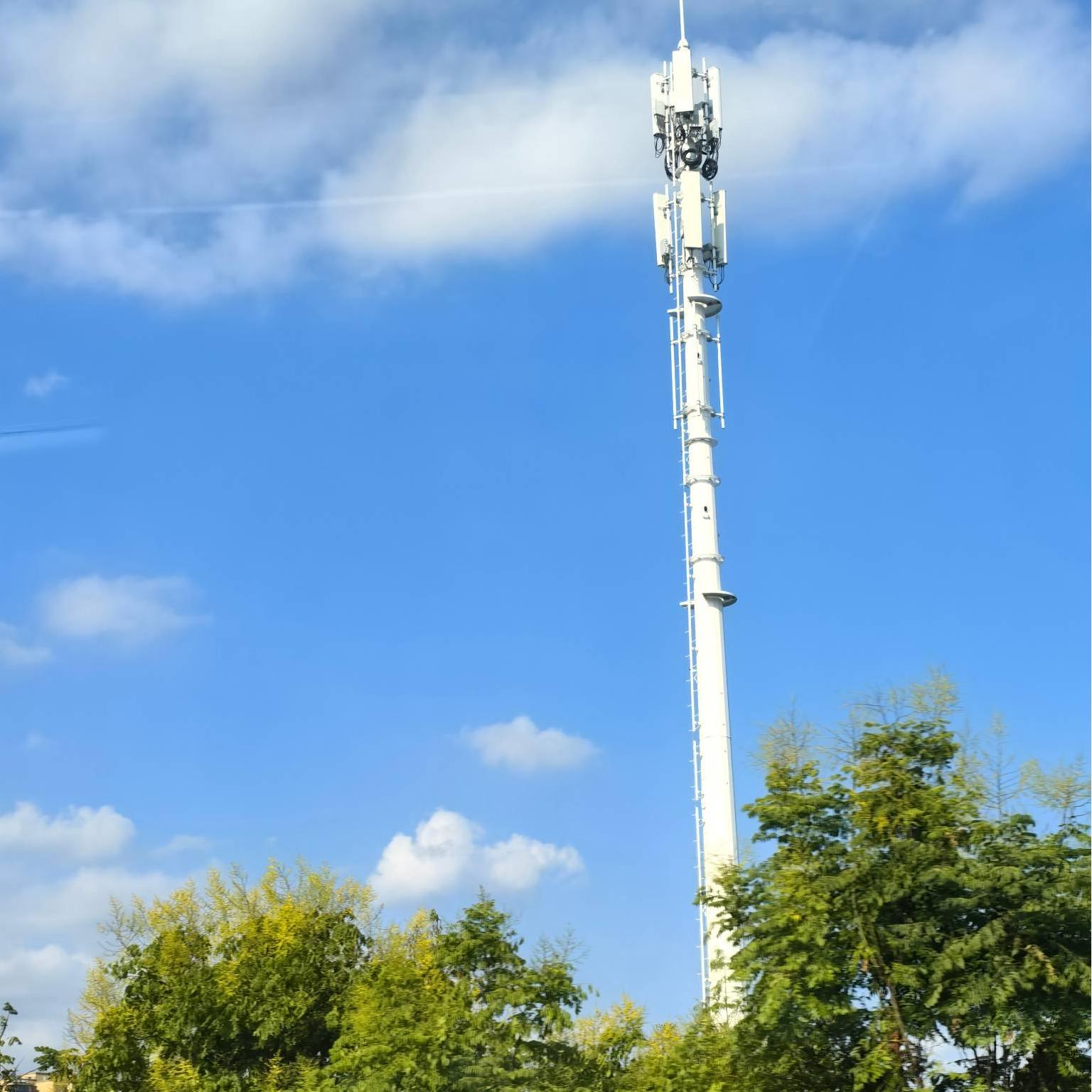
Deploying a Telecommunication Tower requires careful logistical planning. The connection type you choose drastically alters the equipment you need on site. It also dictates how your crew manages the physical assembly process.
Heavy machinery utilization looks very different depending on your connection style. You must align your crane rentals with the specific demands of the tower joints.
Flange Assembly: This process requires cranes to hold sections completely stationary in the air. Crews then manually align the bolt holes using spud wrenches before inserting the hardware. It is generally more forgiving if minor ground-level adjustments become necessary during alignment.
Slip Joint Assembly: This process requires dynamic force. It demands continuous vertical crane pulling. Alternatively, crews use specialized hydraulic jacking systems, commonly known as come-alongs. These systems force the sections together to achieve the specified overlap distance.
Environmental conditions heavily impact slip joint installations. Crews must assemble slip joints quickly before temperature differentials affect the steel. If the sun heats one side of the tube, the steel expands unevenly. This thermal expansion can cause the joint to seize prematurely before reaching the required overlap. Flange connections do not suffer from this specific temperature sensitivity.
Space constraints often dictate connection choices. Flange bolting requires clear aerial access around the entire perimeter of the joint. Crew baskets (man lifts) must navigate around the tower safely. Conversely, slip joints often pull together with significantly less manual aerial labor. This reduced aerial footprint makes slip joints ideal for tight deployment spaces.
Project managers constantly balance labor costs against deployment speed. The connection method plays a major role in determining your final labor expenditure.
Speed is the primary advantage of the friction-fit approach. Slip joints can cut section-mating time by up to 50 percent. Instead of tightening dozens of bolts in a specific star pattern, the crew simply jacks the sections together. This rapid assembly saves thousands of dollars in expensive hourly crane rental costs.
The type of labor you hire changes based on the tower design. You must match your crew's certifications to the engineering requirements.
Flange Crews: Flanges require certified bolting crews. These workers must be skilled in precise tensioning techniques. They meticulously follow strict torque sequences to ensure structural integrity.
Slip Joint Crews: Slip joints require highly experienced rigging specialists. These riggers must deeply understand hydraulic jacking forces. They also need the expertise to read overlap indicators accurately and apply even pressure.
Upfront equipment pricing only tells part of the story. Slip joint sections often carry slightly higher precision-manufacturing costs at the factory. However, the dramatic reduction in active field hours offsets this premium. Ultimately, faster crane releases and fewer hours spent in aerial lifts frequently result in a much lower Total Cost of Installation (TCI).
Infrastructure requires ongoing maintenance. However, the frequency and intensity of that maintenance depend entirely on how the sections connect. Minimizing field visits is crucial for maximizing operational efficiency.
Flanged structures face unique dynamic challenges. Wind-induced vortex shedding creates continuous dynamic vibration. Over time, these vibrations can cause hardware to loosen. Flanged towers therefore require periodic maintenance cycles. Crews must climb the structure to conduct routine bolt torque audits, physically checking for hardware fatigue and retensioning as necessary.
Slip joints excel in long-term reliability. Once a slip joint is fully seated, it settles further under the tower's own dead load. This creates a near-permanent, self-sealing joint. It effectively eliminates the need for future hardware torque audits. You save significant maintenance labor because there are no bolts to check or tighten over the decades.
Environmental moisture is the enemy of steel infrastructure. Connection types handle water ingress differently.
Flange Vulnerabilities: Flanges expose complex geometries to the elements. Bolt threads, nuts, and backing plates create pockets that trap moisture. These areas require heavy galvanization and frequent visual inspection to prevent galvanic corrosion.
Slip Joint Defenses: Slip joints provide a smooth, flush exterior. This seamless profile minimizes potential water ingress points. Installers often seal the single overlap seam with a basic bead of specialized caulk, offering robust weatherproofing with minimal effort.
Before you ever break ground, you must win over local zoning boards. The visual impact of your structure heavily influences municipal approval rates, especially in densely populated areas.
Municipalities and urban planning boards increasingly favor modern designs. They heavily prefer slip joints because this method eliminates bulky, visible flange rings. The result is a highly streamlined, aesthetically pleasing profile. A smooth exterior blends into the skyline much easier than a segmented structure with protruding hardware.
When deployments require stealth, connection profiles matter immensely. A Camouflage Tower is significantly easier to design using slip joint sections. Because the exterior is entirely flush, manufacturers can easily apply faux bark to create monopines (pine tree towers) or conceal antennas inside sleek flagpoles. Flanges disrupt these camouflage materials, making concealment bulkier and less realistic.
Permitting documentation must remain perfectly accurate. Structural analysis reports submitted for municipal permits must clearly state the chosen connection type. This dictates how inspectors evaluate the finished site. Local inspectors will either verify your certified bolt torque logs or they will demand the slip joint overlap measurements post-installation. You must ensure your field crews document these specific metrics meticulously to secure the final certificate of occupancy.
Choosing the right connection requires analyzing your specific site constraints, budget, and labor availability. Use this framework to guide your procurement strategy.
You face remote logistical hurdles: You are deploying in extremely remote areas where specialized hydraulic jacking tools and replacement parts are unavailable.
Future modifications are likely: The tower requires future modular modifications. You might need to disassemble the structure or add extension sections later.
Manufacturing is inconsistent: The manufacturing tolerances from your currently available suppliers are not strictly guaranteed, making precision fits too risky.
Crane time is highly expensive: You are paying a massive premium for crane rental time and you require rapid, same-day deployment.
Zoning boards are strict: The structure is subject to rigid municipal aesthetic guidelines, requiring a clean, seamless appearance.
Maintenance reduction is critical: Minimizing operational expenditures through zero-maintenance joints serves as a primary project performance indicator.
Project Priority | Recommended Connection Type |
|---|---|
Rapid Installation Speed | Slip Joint |
Future Disassembly Capability | Flange |
Minimal Lifetime Maintenance | Slip Joint |
Strict Aesthetic Zoning | Slip Joint |
Standardized Hand-Tool Assembly | Flange |
The choice between slip joint and flange connections fundamentally alters your installation logistics, labor requirements, and lifetime maintenance routines. Flanges offer standardized predictability and easier modular disassembly. However, they demand ongoing maintenance and slower assembly times.
Transitioning to slip joints offers superior operational efficiency and faster deployment for modern infrastructure, provided your rigging crews are equipped for hydraulic assembly and your supplier guarantees precision tolerances. You eliminate recurring hardware audits and gain favor with urban zoning boards through a sleeker aesthetic design.
As a crucial next step, consult with a structural engineering partner to review your site-specific wind loads and logistical constraints. Proper engineering foresight ensures you finalize the right manufacturing specifications before the steel is ever poured.
A: Yes, but it is highly difficult. It requires immense reverse hydraulic force to break the friction seal. Over time, the sections settle tightly under the dead load. This makes slip joint structures generally suitable for permanent installations only.
A: Manufacturers provide minimum and maximum overlap marks on the inner shaft. Installers must apply vertical jacking force until the outer shaft rests firmly within these specified tolerances. A site inspector then visually verifies this measurement.
A: Yes. To meet strict structural compliance (like the TIA standard), flange bolts must be tightened to specific tension requirements. Crews use calibrated hydraulic or pneumatic torque wrenches to achieve this. These bolts must also be re-audited periodically to ensure they remain tight.


