


Views: 0 Author: Site Editor Publish Time: 2026-11-22 Origin: Site


Operational challenges often emerge without warning. You might face an immediate need for capacity expansion. Sometimes permanent infrastructure remains unfeasible, heavily delayed, or completely destroyed. Network outages demand immediate action. A delayed permanent site leaves highly vulnerable gaps in critical communications. A cell on wheels tower serves as a highly tactical, temporary solution. However, it is not a simple one-size-fits-all fallback. Choosing this deployment means you must actively weigh rapid mobility against specific site footprint constraints. You must also evaluate backhaul availability and strict compliance regulations. This definitive evaluation guide directly assists network planners, event organizers, and emergency directors. You will accurately determine if this portable structure aligns perfectly with your immediate timeline, operational budget, and precise technical requirements. Read on to master these complex deployment variables. We will explore scenarios, technical specifications, and viable alternatives.
A COW (Cell On Wheels) is optimal for rapid deployment scenarios (disaster recovery, events, construction) but requires strict evaluation of footprint and terrain limits.
Total cost of ownership or rental hinges on deployment duration, power source requirements (generator vs. solar), and backhaul integration.
Alternatives like Movable Telecom Cabins or COLTs (Cell on Light Trucks) may offer better ROI depending on the need for equipment shelter or extreme mobility.
Evaluating wind load ratings, local zoning exceptions, and site preparation is non-negotiable before procurement or deployment.
Building permanent cell towers takes many months, and sometimes it takes several years. You must navigate complex local zoning laws and secure difficult municipal permits. You also manage lengthy, unpredictable construction schedules. Environmental impact reports add further frustrating delays. Community board approvals often stall progress completely. In stark contrast, you can deploy a temporary mobile tower rapidly. It takes mere hours or days.
Next, understand the fundamental capacity dilemma. You must clarify your core network requirement. Do you need basic coverage or high-density capacity? Coverage fills a geographic dead zone. Signals simply cannot reach these isolated areas naturally. Capacity handles concentrated data spikes at a single location. Think of a crowded music festival. Everyone uploads high-definition videos simultaneously. You need massive throughput, not just a distant radio signal.
Finally, evaluate the cost versus duration matrix. We provide a simple decision threshold framework. For projects lasting under 24 months, temporary deployments generally make stronger financial sense. You avoid massive upfront capital expenses. You skip purchasing land or executing 30-year lease agreements. Beyond two years, the equation shifts. Sustained temporary power expenses grow significantly. Long-term equipment leasing begins to overlap with permanent construction investments. Carefully map your exact timeline before deciding.
Best Practice: Always baseline your expected network traffic mathematically before ordering a unit.
Common Mistake: Planners often confuse coverage needs with capacity needs. This leads to inadequate equipment specification and poor user experiences.
Disaster Recovery & First Response: Terrestrial grids fail frequently during natural disasters. Hurricanes and wildfires sever fiber lines entirely. You need self-contained, rapid-response units immediately. These mobile setups often rely on satellite backhaul. They restore emergency communications quickly when traditional networks collapse. First responders depend heavily on this instantaneous connectivity.
High-Density Temporary Events (Festivals, Sports): Large crowd gatherings create massive, transient capacity spikes. Existing local towers cannot handle the sudden load. You must manage localized, high-traffic zones effectively. Vendor point-of-sale systems require uninterrupted data. Ticketing apps demand fast verification. Directional antennas prove highly critical here. You also benefit immensely from rapid setup and teardown capabilities.
Remote Construction, Mining, & Oil/Gas: Harsh, off-grid environments demand highly durable connectivity. Topography changes frequently as a project evolves over time. Heavy machinery operators rely on automated safety systems. Engineers need instant access to complex digital blueprints. A COW (Cell On Wheels) provides a robust baseline signal. It adapts easily across continuously expanding work sites.
Network Bridging & Tower Maintenance: Permanent structures require periodic hardware upgrades. Sometimes carriers relocate or repair existing sites. You must maintain strict Service Level Agreement (SLA) compliance. Dropped calls frustrate loyal subscribers rapidly. A temporary deployment ensures seamless customer experiences. It bridges the gap perfectly during these essential transitions.
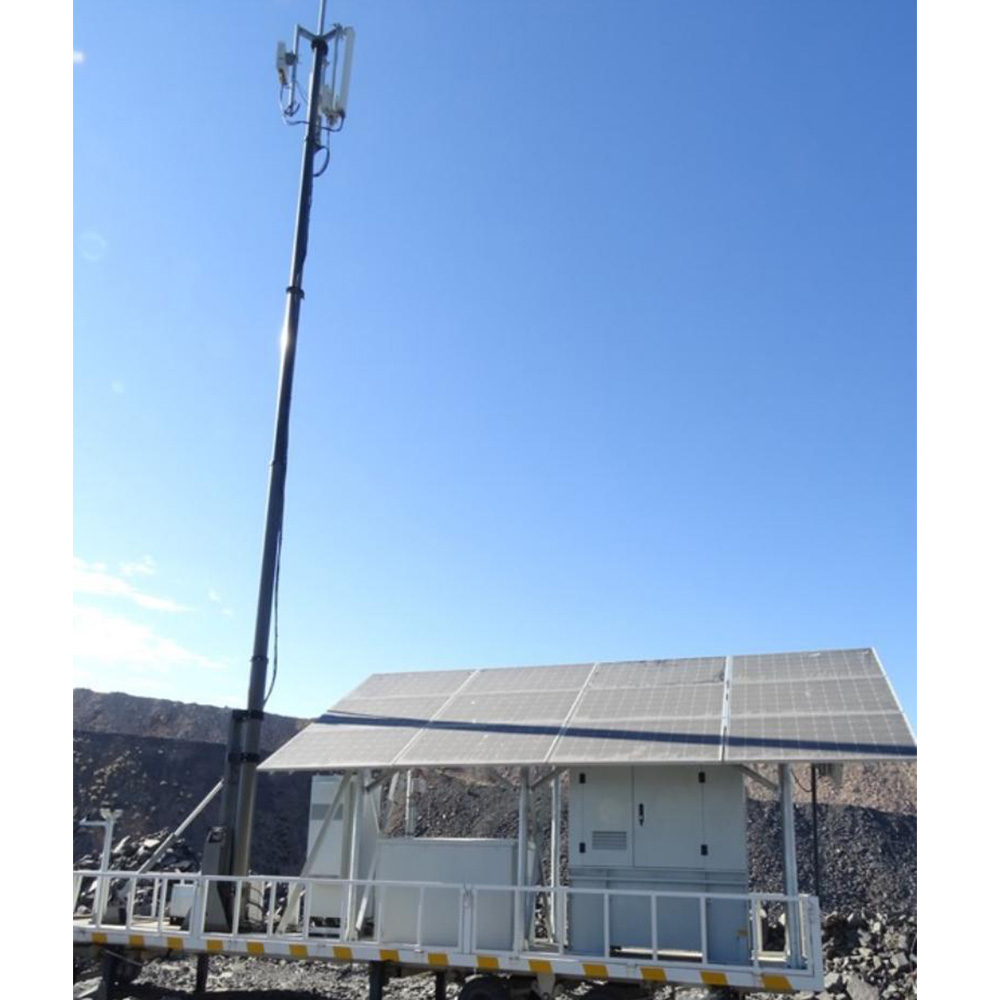
Selecting the correct Portable Cell on Wheels Telecom Tralier Tower requires precise engineering calculations. You cannot guess these specifications. A poor choice guarantees network failure.
Mast Height & Payload Capacity: You must match your pneumatic or lattice mast height to your required RF footprint. These masts typically range from 30 to 106 feet. Taller masts provide better line-of-sight propagation. However, you must also calculate the exact equipment weight. Radios and antennas add significant top load. A heavier payload restricts your maximum safe elevation.
Power and Redundancy Systems: Evaluate your onboard power systems carefully. Options include diesel generators, high-capacity battery banks, and solar hybrids. Diesel offers highly robust power output. Yet, it demands strict, continuous fueling logistics. You must schedule regular delivery trucks. Solar hybrid models reduce local emission compliance headaches. They also extend autonomous operational windows significantly.
Structural Stability & Wind Load Compliance: You must adhere strictly to TIA-222 engineering standards. Evaluate outrigger footprints and guy-wire requirements carefully. Understand the operational limits of your unit. Extreme weather conditions demand proactive safety measures. You must lower the mast before wind speeds exceed rated thresholds.
Backhaul Agnosticism: Your physical site realities dictate connectivity. Ensure the portable unit integrates seamlessly. It should accept microwave links easily. It must connect to satellite feeds in remote zones. It should also splice into existing fiber tap points whenever available.
We establish trust by acknowledging physical limits. A trailer-mounted unit is not always your best answer. Certain environments demand highly specialized form factors. You must evaluate these alternatives objectively.
Deployment Alternatives Comparison Chart
Equipment Type | Ideal Use Case | Setup Speed | Primary Limitation |
|---|---|---|---|
Trailer Unit | Festivals, disaster recovery | Hours | Requires trailer towing clearance |
COLT (Truck) | Urban zones, rapid news broadcast | Minutes | High vehicle maintenance overhead |
Telecom Cabin | Sensitive routing hubs | Days | Slowest mobility, high weight |
Skid-Mounted | Long-term construction | Hours to Days | Requires forklift or crane placement |
We strongly recommend COLTs for hyper-mobile needs. Some situations demand a drive-and-broadcast approach. Towing a trailer poses a severe logistical barrier in dense urban zones. Tight corners make trailer navigation dangerous. COLTs bypass this issue completely. The equipment mounts directly onto a rigid truck chassis.
We recommend movable telecom cabins when you need extensive shelter. Sensitive, high-volume routing equipment requires precise climate control. Dust and extreme temperatures degrade complex network switches rapidly. A cabin provides necessary environmental protection. You sacrifice rapid mobility for vital hardware security.
We recommend skids for medium-term deployments. Consider multi-year construction sites. These locations often permit significant ground disturbance. You can drop a skid directly onto a prepared gravel pad. A wheeled trailer chassis becomes an unnecessary rental expense here.
You must address physical ground realities first. A deployment requires perfectly level terrain. You cannot park safely on soft mud or uneven slopes. You need strict clearance from overhead hazards. Power lines pose lethal threats during mast elevation. Outrigger deployment demands specific, wide spatial footprints. You might need to pour gravel pads before arrival.
Temporary structures often bypass permanent zoning laws. However, they rarely escape all red tape. You still require local municipal permits. Event organizers must file special use applications. You might need FAA clearance. This depends heavily on your total mast height and proximity to local airports. Flashing red aviation beacons are often mandatory. Structural engineering reviews remain crucial for liability protection.
Calculate the hidden costs of physical transportation. Evaluate towing weight classes carefully. Heavy units require specialized trucks. Determine CDL (Commercial Driver's License) requirements for your transport drivers. You must also factor in routine site maintenance. Generator servicing involves regular oil changes and filter replacements. Long-term field deployments accumulate these operational expenses rapidly. Budget accordingly to avoid surprises.
Your final decision rests on a delicate balance. You must weigh deployment speed against terrain viability. You must also forecast the required duration accurately. Portable structures provide unmatched tactical flexibility. They rescue operations when you face urgent network demands. They bridge gaps perfectly.
As a crucial next step, conduct a thorough physical site survey. Do this before making financial commitments. Define your exact power and backhaul requirements meticulously. Determine your footprint limits precisely. Only after finalizing these hard metrics should you initiate vendor RFQs. This structured approach ensures you procure the exact system you need.
A: Transport time varies by distance, but physical setup is remarkably fast. Once you arrive at a fully prepped, level site, deployment ranges from 1 to 4 hours. Pneumatic masts elevate quickly. Lattice structures may require slightly more physical assembly time. Pre-configured radios speed up the process significantly.
A: No. They function as highly autonomous units. They rely on onboard diesel generators, high-capacity battery banks, or solar inputs. Depending on the fuel tank size and power draw, standalone setups can operate for days or weeks before needing a fuel delivery. You can also utilize shore power if available.
A: Yes, if properly stabilized. You must adhere to strict engineering ratings like TIA-222. Units use heavy outriggers and guy-wires to maintain structural integrity. However, during severe weather events exceeding the tower's rated wind load, you must actively lower the mast to prevent catastrophic failure.


