


Views: 0 Author: Site Editor Publish Time: 2026-11-18 Origin: Site


Structural collapses often happen without any obvious warning signs. They cause massive service disruptions and pose severe safety hazards. Evaluating a guyed mast tower requires highly precise, quantifiable maintenance protocols. Basic visual checks are no longer enough to ensure safety. You must dive deeper into the physics holding the structure upright. These systems rely entirely on the perfect equilibrium of tensioned cables and ground anchors. A single point of failure can quickly lead to catastrophic collapse. Such failures bring severe OSHA compliance violations and extensive network downtime. You face major financial liabilities if you neglect rigorous regular audits. This guide breaks down the critical evaluation criteria you need today. We will cover cable tensioning standards, anchor health assessments, and corrosion mitigation strategies. You will gain an evidence-based framework to audit your existing maintenance programs. We also provide practical tips for vetting third-party inspection services safely and effectively.
Tension Standardization: Precise cable tensioning is non-negotiable; asymmetrical loading caused by improper tension or thermal expansion accelerates structural fatigue.
Subterranean Risk: Anchor points are the most vulnerable and least visible components, requiring specialized non-destructive testing and soil analysis to evaluate degradation.
Corrosion Prioritization: Not all rust is equal. Differentiating between surface oxidation and systemic structural corrosion dictates the timeline and budget for remediation.
Vendor Accountability: Qualified maintenance providers must adhere to stringent industry standards (e.g., TIA-222) and provide verifiable, data-rich inspection documentation rather than generic checklists.
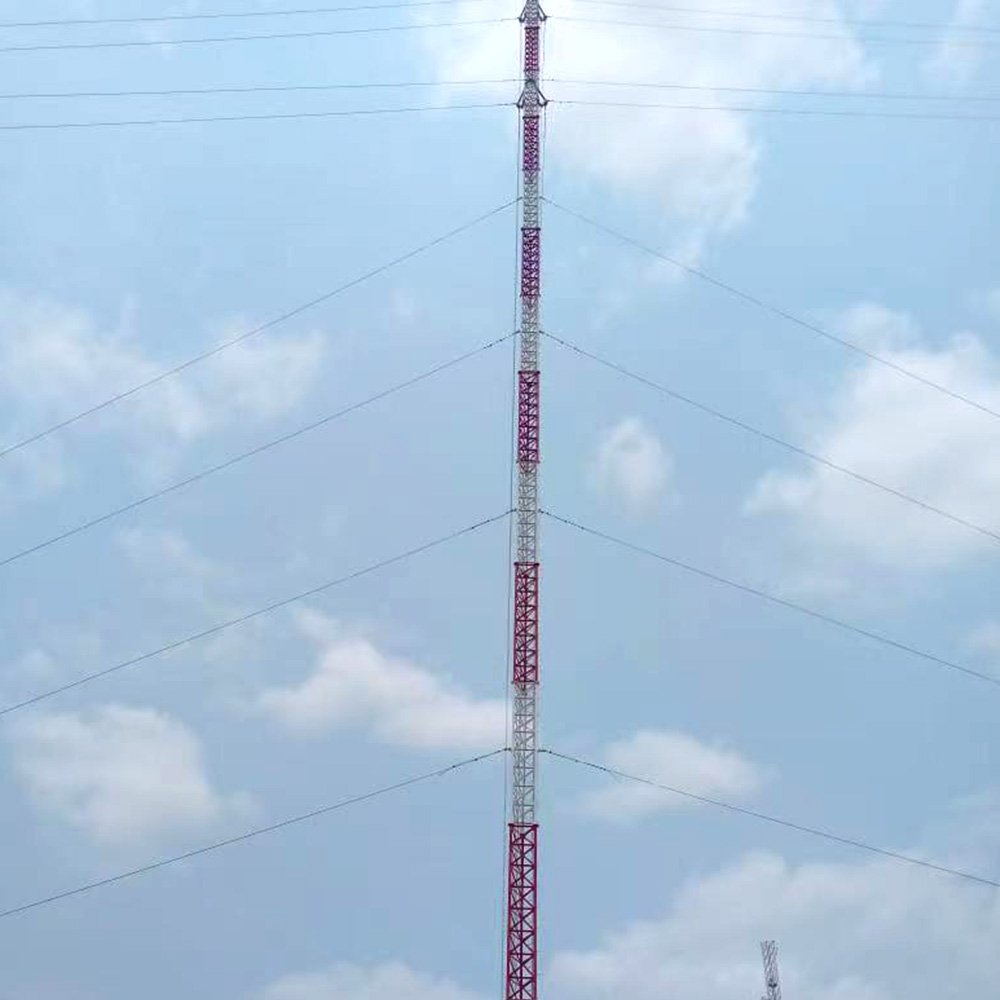
Infrastructure managers must understand the unique vulnerability of these structures. Unlike self-supporting structures, a Guyed Mast lacks structural redundancy. A lattice tower with self-supporting legs can sometimes withstand damage to a single bracing member. Guyed structures cannot. They depend entirely on cable tension to remain vertical. A failure in a single guy wire instantly compromises the entire system. Anchor point failures yield the exact same catastrophic result. The structure will buckle and fall within seconds.
You must weigh proactive maintenance costs against the financial devastation of a structural collapse. Baseline preventative maintenance requires a modest annual budget. In contrast, a collapse brings catastrophic financial liabilities. You will face immediate equipment loss from destroyed antennas and transmitters. Emergency site clearing demands premium contractor rates. Extended network downtime triggers severe Service Level Agreement (SLA) penalties. Regulatory bodies will issue heavy fines for the failure. Proactive audits protect your bottom line from these massive, unexpected hits.
Never frame maintenance merely as an optional operational expense. It operates as a mandatory legal safeguard. OSHA regulations strictly dictate the safety conditions required for routine tower climbs. Industry-standard safety bulletins heavily emphasize fall protection and hazard mitigation. A compromised guy wire creates a deadly environment for climbing technicians. If a technician suffers an injury due to undocumented structural fatigue, you carry the legal liability. Routine, documented evaluations prove your commitment to baseline safety regulations.
Data-driven maintenance practices maximize the useful life of your infrastructure. Proactive tension calibration prevents metal fatigue from developing prematurely. Aggressive anti-corrosion treatments stop rust before it compromises load-bearing steel. These interventions directly extend the operational lifespan of the asset. By keeping the existing structure healthy, you successfully defer the heavy capital expenditure required for a complete tower replacement.
Cable tensioning relies strictly on the physics of structural equilibrium. Cables hold the mast in perfect vertical alignment. However, initial tensioning must account for environmental variables. Ambient temperature heavily influences steel cables. They expand in the summer heat and contract in the freezing winter cold. Adjusting tension without factoring in the current ambient temperature guarantees inaccurate baselines. You must also account for dynamic wind loads. The tower must remain plumb under varying wind speeds to distribute compressive weight evenly.
Industry professionals utilize three primary methods to measure guy wire tension. Each method carries specific advantages and execution risks. You must select the right tool for your specific audit requirements.
Table 1: Cable Tension Measurement Methods Comparison
Measurement Method | Description | Accuracy Level | Best Use Case |
|---|---|---|---|
Direct Tension Measurement | Utilizes calibrated inline tensiometers installed directly on the wire. | Very High | Empirical data collection during comprehensive structural audits. |
Pulse/Oscillation Method | Evaluates the time-delay of a wave traveling up the guy wire. | Moderate | Quick preliminary audits, though subject to human execution errors. |
Intercept Method | Uses transit levels to verify the geometric alignment and sag of cables. | High | Verifying tension geometry on heavily loaded, complex mast arrays. |
Knowing when to tighten a cable is critical. Knowing when to replace it is even more important. You must carefully assess the risks associated with improper tension levels. Over-tensioning pulls the mast downward excessively. This increases the compressive load on the central mast, raising the risk of buckling. Under-tensioning creates equally dangerous conditions. Loose cables allow excessive tower sway during high winds. This sway causes aggressive metal fatigue at the structural joints. Evaluate the cable strands closely. If you see broken strands or severe rust, do not tighten the cable. You must replace it.
Adjusting tension blindly introduces massive structural risks. You face severe danger if you adjust tension without comprehensive structural mapping. A single turnbuckle adjustment alters the stress profile across the entire mast. Tightening one wire changes the load borne by the opposite anchor. You must adjust cables symmetrically and systematically.
Best Practice: Always record the ambient temperature on your tension worksheets during adjustments.
Common Mistake: Adjusting a single guy level without subsequently verifying the tower's overall plumb.
Common Mistake: Relying purely on the pulse method for final compliance reporting.
The most critical part of your structure usually remains buried underground. You must acknowledge this hidden vulnerability. A flawless mast above ground means nothing if the subterranean anchors are failing. Visual inspection of the exposed anchor head is entirely insufficient. Structural failures rarely originate above the soil line. They almost always start deep in the earth where inspectors cannot easily look.
Environmental chemistry attacks buried steel relentlessly. Soil acidity plays a massive role in anchor degradation. Highly acidic soils strip galvanization away quickly. Moisture retention around the anchor shaft creates constant oxidation conditions. In colder climates, frost heave presents a mechanical threat. Expanding ice in the soil grips the anchor shaft and pushes it upward. This upward force stretches the steel and damages protective coatings.
Evaluating buried steel requires specialized techniques. You cannot guess the health of an anchor shaft.
Ultrasonic / Non-Destructive Testing (NDT): This highly accurate method sends high-frequency sound waves down the buried anchor rod. The waves bounce back to the sensor. This data allows engineers to evaluate the remaining cross-sectional area of the buried steel. It reveals hidden pitting and sectional loss without digging.
Excavation Audits: NDT provides great data, but nothing beats visual verification. Periodic partial excavations are an absolute necessity. Digging safely around the anchor shaft allows technicians to physically measure the steel. They can inspect the transition zone where the rod enters the concrete block.
You have several effective solutions to mitigate anchor degradation. Evaluate the return on investment (ROI) for these proactive measures. Installing physical anchor guard systems protects the exposed heads from landscaping equipment and wildlife. Applying robust protective mastic coatings below the soil line blocks moisture intrusion. For highly corrosive soils, utilize cathodic protection. Sacrificial anodes bleed off corrosive electrical currents, neutralizing galvanic corrosion before it attacks the steel anchor.
When protecting an Antenna Telecommunication Steel Guyed Mast Lattice Tower, managing corrosion is your most frequent maintenance task. Rust acts like a slow-moving fire. If left untreated, it will consume the structural integrity of the steel.
Not all rust requires the same response. You must classify corrosion accurately to deploy your maintenance budget effectively.
Surface / Cosmetic: This represents a minor breakdown of the outer galvanization. You will see light orange discoloration. It requires basic monitoring. Technicians can apply localized cold-galvanizing zinc compounds to stop the spread.
Pitting / Flaking: At this stage, actual structural loss begins. The steel develops physical craters. Paint and cold galvanizing will no longer work. It requires aggressive mechanical cleaning with wire wheels. Afterward, technicians must apply heavy-duty protective encapsulants.
Sectional Loss: The corrosion has eaten away a measurable percentage of the steel's thickness. This is an immediate red flag. It requires an urgent engineering review. The engineer will determine if structural reinforcement is possible, or if complete component replacement is mandatory.
Inspectors must focus heavily on dissimilar metal interactions. Galvanic corrosion occurs rapidly when two different metals touch in a wet environment. Hardware components, turnbuckles, and grounding wires are highly vulnerable. Copper grounding wires attached directly to galvanized steel legs create strong galvanic cells. The steel will sacrifice itself to the copper and rust aggressively. Ensure your technicians isolate dissimilar metals using proper dielectric hardware.
You must hold remediation contractors to strict performance standards. Do not pay for temporary cosmetic paints. Paint hides structural problems without solving them. Ensure contractors use appropriate abrasive blasting methods. They must clean the steel to SSPC (Society for Protective Coatings) standards. Following the prep work, demand the use of marine-grade epoxy or heavy zinc-rich coatings. These industrial coatings lock out moisture and provide long-lasting structural protection.
Your maintenance is only as reliable as the vendor performing it. You must establish strict shortlisting logic. Shortlist only those vendors who explicitly map their Standard Operating Procedures (SOPs) to current TIA-222 standards. TIA-222 is the definitive standard for telecommunications tower engineering and maintenance. Furthermore, verify they comply fully with all local and federal regulatory frameworks.
Demand complete transparency from your service providers. A qualified vendor must deliver a comprehensive, data-rich report. Do not accept a simple pass/fail checklist. Their final documentation must include high-resolution photographic evidence of all critical junctions. They must provide detailed plumb and tension worksheets showing ambient temperatures and precise load measurements. The report should conclude with a thorough structural impact analysis.
Never hire a vendor with a questionable safety history. Request their internal OSHA compliance records during the bidding phase. Review their documented fall protection protocols. Ask for verifiable documentation of their ongoing technician training. A vendor that cuts corners on their own safety will absolutely cut corners on your tower inspections.
To overhaul your maintenance program, take these three actionable steps:
Commission a baseline, third-party structural audit from an independent engineering firm.
Cross-reference your existing maintenance logs with the new audit results to identify historical oversight gaps.
Issue a targeted Request for Proposal (RFP) for any required remediation, basing your scope of work strictly on the verifiable data gathered in step one.
Effective guyed mast tower maintenance is fundamentally an exercise in strict risk management and structural physics. You cannot afford to rely on reactive repair strategies. Proactive evaluation prevents catastrophic losses. By prioritizing precise cable tensioning, you maintain the vital equilibrium of the structure. Through exhaustive subterranean anchor inspections, you uncover hidden threats before they trigger a collapse. Targeted corrosion control stops degradation in its tracks, deferring massive capital replacement costs. Evaluating your service providers based on their adherence to objective data and safety standards is crucial. This disciplined approach ensures that your maintenance budgets deliver maximum, measurable structural resilience for years to come.
A: Industry standards typically mandate a thorough visual inspection annually. You should commission a comprehensive structural and tension audit every 3 to 5 years. However, you must order an immediate inspection following severe weather events, such as hurricanes or heavy ice storms.
A: Tolerances are strictly dictated by the specific engineering design of the tower. Generally, guy wires are tensioned to approximately 10% of their rated breaking strength. All adjustments and readings must accurately account for the ambient temperature at the exact time of measurement.
A: Yes. Specialized Non-Destructive Testing (NDT) using ultrasonic waves can estimate the remaining cross-sectional thickness of buried anchor rods accurately. However, conducting periodic partial excavation remains the most definitive and highly recommended physical verification method available.
A: Failure is rarely caused by a defect in the mast itself. It is overwhelmingly triggered by the unseen degradation of guy anchors at the soil line, or by the sudden failure of improperly tensioned cables acting under extreme wind or ice loading.


