


Views: 0 Author: Site Editor Publish Time: 2026-08-08 Origin: Site


Modern telecom infrastructure faces a massive challenge today. Network providers must rapidly expand 5G and LTE coverage to meet surging global data demands. However, they frequently encounter strict local zoning laws, incredibly limited land availability, and severe environmental exposure in key deployment zones. A Galvanized Steel Monopole Tower serves as the industry-standard solution to solve these exact hurdles. It perfectly balances a minimal spatial footprint with maximum structural longevity. You can deploy it in dense urban areas where traditional large-footprint structures simply cannot fit. This article provides procurement teams and network engineers with a comprehensive evaluation framework. We will explore the structural anatomy, advanced coating benefits, and rigorous technical specifications of these crucial telecom assets. You will learn exactly how to select, specify, and confidently implement these towering assets for your next major network expansion project.
Definition: A single-tube, multi-sided, or conical steel structure designed to carry telecom antennas, requiring a fraction of the land space of traditional lattice towers.
Durability: Hot-dip galvanization acts as a metallurgical barrier, extending structural lifespans to 30–50+ years even in high-corrosion environments.
Cost-Efficiency: While initial material costs may vary, monopoles drastically reduce land acquisition costs, site prep time, and long-term maintenance overhead.
Procurement Focus: Supplier evaluation must prioritize stringent welding standards, verified galvanization thickness (e.g., ASTM A123/ISO 1461), and accurate wind-load engineering.
A telecom single-pole structure consists of a freestanding, self-supporting mast. Manufacturers build them using high-strength tubular steel plates. They expertly bend and weld this steel into a tapered polygon or a smooth circular cross-section. Field crews typically assemble the massive structure using either slip-joint connections or flanged mating sections.
Slip joints use friction and immense gravity to lock tapered sections tightly together. This method requires heavy hydraulic jacking tools during the final site assembly. Conversely, flanged designs utilize heavy bolted circular plates. These flanges require precise torque specifications but allow crews to assemble the sections quickly using standard cranes.
Network engineers face a major business problem in modern deployments. Securing large parcels of land in urban or suburban environments has become prohibitively expensive. Traditional guyed masts require extensive surrounding land for their tensioned anchor wires. Standard lattice towers demand massive square footage just to accommodate their wide four-legged bases. A well-engineered Monopole Tower neatly solves this spatial dilemma. It empowers telecom operators to squeeze vital network nodes into tight municipal spaces, alleyways, and small commercial lots.
We routinely see these elegant structures deployed across several primary telecom use cases:
Macro-cell sites: They serve as the heavy-duty backbone for rapid 4G and 5G network expansion in populated regions.
Multi-tenant colocation sites: They easily support multiple competing carriers on a single structure, maximizing site revenue for tower leasing companies.
Smart city infrastructure integration: They blend seamlessly into municipal streetscapes. Cities use them to house IoT sensors, traffic control systems, and public security cameras.
Raw steel inevitably rusts when exposed to moisture and atmospheric oxygen. Galvanizing protects raw steel from this relentless environmental degradation. The hot-dip galvanizing process follows a highly controlled technical framework. First, facility technicians rigorously clean the steel in caustic solutions to remove dirt, grease, and mill scale. Next, they apply a specialized chemical flux solution to prevent further oxidation. Finally, they immerse the heavy steel components completely into a massive bath of molten zinc heated to roughly 840 degrees Fahrenheit.
This process is not merely dipping metal into paint. The high temperatures trigger a complex metallurgical reaction. The resulting bond provides unmatched defense against atmospheric corrosion. This process delivers specific technical features that drive highly tangible field outcomes.
Feature: The molten immersion creates tightly bonded zinc-iron alloy layers (known technically as zeta, delta, and gamma layers). These intermetallic layers are actually physically harder than the base carbon steel itself.
Outcome: This exceptional hardness delivers superior abrasion resistance. It rigorously protects the tower from impact damage during rough transport and resists high-wind sand particle erosion over decades of service.
Feature: The zinc coating provides active cathodic protection.
Outcome: The zinc layer acts as a sacrificial anode. It actively sacrifices its own electrons to protect the underlying steel. If a technician accidentally drops a tool and scratches the surface deeply, the surrounding zinc will intelligently corrode first, preventing localized rust failures from eating into the structural steel.
Asset longevity requires strict adherence to global engineering standards. Procurement teams must actively verify supplier compliance with established frameworks. Look for strict adherence to ASTM A123 or EN ISO 1461. These standardized global codes guarantee a minimum coating thickness and exact uniformity across the entire structure. Skipping this critical verification opens your network infrastructure to premature structural decay and dangerous fatigue failures.
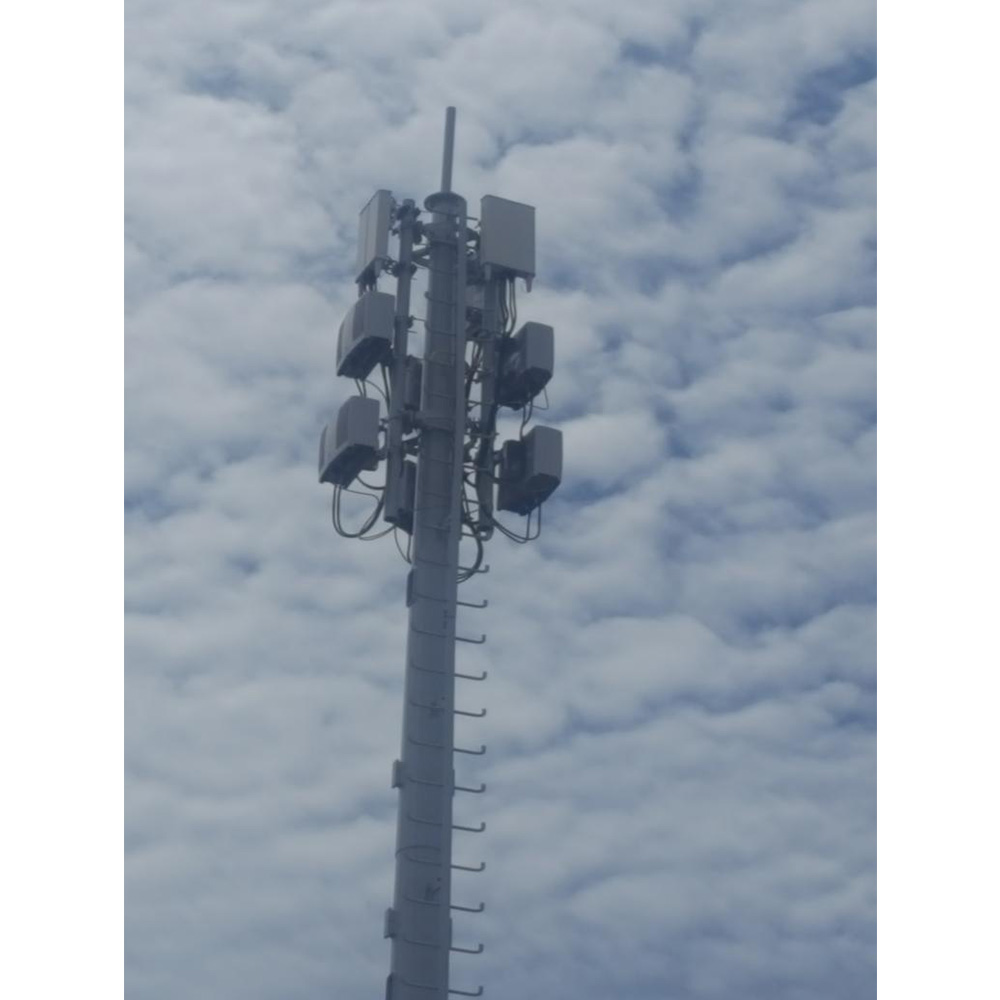
Network planners frequently weigh single-pole designs against traditional lattice structures. Spatial footprint often dictates the final engineering choice. A single-pole structure requires a significantly smaller foundation layout. In many deployment scenarios, it occupies just 10% to 20% of the ground space required by a standard four-legged lattice tower. This highly compact footprint directly reduces monthly real estate lease rates. It also slashes upfront land purchase costs.
Zoning boards and local residential communities heavily scrutinize aesthetic impacts today. The "Not In My Back Yard" (NIMBY) phenomenon often stalls network expansions. Single-pole designs face much less community resistance during public hearings. They present a clean, slender, and modern profile against the skyline. Manufacturers can also easily provide camouflaged options. You might see these cleverly disguised as artificial pine trees (monopines), palm trees, or giant civic flagpoles. These highly concealed designs still rely entirely on a hidden, heavily galvanized steel core to maintain structural rigidity.
Deployment velocity also heavily favors the single-pole approach. They arrive at the construction site in pre-fabricated, modular tubular sections. Rigging crews spend far less time bolting thousands of tiny components together on site. A lattice tower requires sorting and bolting hundreds of individual angle-iron pieces. A single-pole structure simply stacks together. This streamlined installation dramatically lowers on-site labor costs and speeds up commercial network activation.
Evaluation Criteria | Single-Pole Structure | Traditional Lattice Tower |
|---|---|---|
Land Space Requirement | Minimal (highly compact foundation layout) | Extensive (wide multi-leg base footprint) |
Installation Velocity | Rapid (stacks pre-fabricated large sections) | Slower (requires complex on-site bolting) |
Community Aesthetic Appeal | High (clean lines, very easy to conceal visually) | Low (industrial appearance, visually intrusive) |
Zoning Approval Process | Generally smoother in urban/suburban zones | Often heavily restricted in populated residential areas |
Transport Logistics | Requires heavy flatbeds for long solid tubes | Can be shipped densely packed in smaller pallets |
You cannot responsibly select a telecom tower based on structural height alone. Site-specific environmental variables completely dictate the required steel thickness and pole taper ratio. Structural engineers must calculate precise wind load limits based on local meteorological data. They must factor in historical ice loads, which significantly increase the weight and drag of the tower. They must also account for local seismic zone activities. A robust structure must flex safely under hurricane-force winds without ever sustaining permanent plastic deformation.
Network scalability depends heavily on antenna loading limits. Decision-makers must rigorously evaluate the tower’s Effective Projected Area (EPA) capacity. This critical engineering metric determines exactly how much wind resistance the mounted equipment will generate. A modern 5G panel antenna catching high wind acts remarkably like a ship's sail. You need to know exactly how many heavy radomes, remote radio units (RRUs), and large microwave dishes the pole can safely support. Overloading a structure beyond its engineered EPA capacity invites catastrophic buckling during extreme weather events.
Foundation requirements also play a deeply critical role in overall project planning. You must base your foundation design exclusively on a comprehensive geotechnical soil report. Different subterranean soil conditions require completely distinct engineering approaches. Here are the most common foundation types utilized in these deployments:
Drilled Pier Foundations: Construction crews drill a very deep, single cylindrical hole directly into the earth. They drop in a rebar cage and fill it with high-strength reinforced concrete. This works exceptionally well in cohesive clay soils and spatially tight urban environments.
Pad and Pier Foundations: This traditional method uses a wide, shallow concrete block beneath the surface. Engineers prefer this spreading approach when they hit solid bedrock early or face very poor deep-soil friction stability.
Rock Anchor Foundations: Specialized teams drill directly into solid granite or rock formations. They use high-strength steel tendons to secure the steel base plate to the earth. This method drastically reduces the required concrete volume but demands specialized drilling equipment.
Procurement teams must actively mitigate serious implementation risks early in the sourcing phase. Quality control vulnerabilities often hide dangerously beneath a fresh, shiny coat of zinc. Subpar longitudinal seam welds represent a massive structural danger. A weak vertical weld can cause the entire steel pole to split and buckle under heavy dynamic loads. You must look strictly for suppliers who provide verifiable non-destructive testing (NDT) certifications. Mandating Ultrasonic Testing (UT) or Magnetic Particle Inspection (MPI) ensures the internal weld integrity flawlessly meets international safety codes like TIA-222.
Galvanization defects present another highly serious risk factor. Improper storage environments or rushed open-air transport can cause "white rust" (zinc hydroxide) to form rapidly. This powdery white residue heavily degrades the protective layer before installation even begins. Furthermore, uneven coating thickness leaves thin microscopic spots highly vulnerable to rapid atmospheric corrosion.
Logistics and physical site access pose massive logistical headaches for project managers. Transporting 30-to-50-foot solid heavy steel sections requires specialized extended flatbed trailers. Delivering these massive tubes to remote mountaintops or navigating them through highly congested urban alleys requires meticulous route planning. You must deeply evaluate a supplier's logistical track record and staging capabilities early in the sourcing process.
Take these highly concrete next-step actions when shortlisting manufacturing suppliers:
Request comprehensive Factory Acceptance Testing (FAT) protocols before ever signing procurement contracts.
Require detailed structural calculation reports strictly signed and stamped by licensed professional structural engineers.
Verify all detailed warranty terms regarding long-term corrosion resistance and cyclic structural fatigue limits.
Demand clear documentation of the exact steel grades being sourced for the raw manufacturing process.
Investing in robust telecom infrastructure requires looking far beyond the initial upfront material price tag. True long-term operational value and lifecycle resilience are strictly secured through rigorous specification of the galvanization process. You must consistently demand accurate, site-specific load engineering for every single deployment location. A carefully engineered structure completely eliminates the need for premature site replacements. It heavily minimizes dangerous emergency maintenance calls over its multi-decade operational lifespan.
Ultimate network reliability depends entirely on the physical structures holding your costly antennas in the air. Never cut corners on structural weld integrity or environmental protection coatings. We strongly encourage procurement buyers to consult directly with licensed structural engineers. Request detailed, compliance-backed quotes exclusively from ISO-certified steel manufacturers. Taking these deliberate, highly cautious steps ensures your network backbone will stand strong and profitable for decades to come.
A: A properly manufactured galvanized structure typically lasts 30 to 50 years or more. This lifespan depends heavily on the environmental corrosivity of the specific deployment site and the initial zinc coating thickness. In highly corrosive coastal or industrial areas, the zinc layer sacrifices itself faster, but regular maintenance inspections can help preserve its long-term integrity indefinitely.
A: Standard telecom single-pole structures typically range from 15 meters to 60 meters in total height. Pushing beyond 60 meters becomes physically and logistically difficult. Extreme heights require massive steel base diameters and highly specialized transport equipment, often making standard lattice towers a much more practical choice for ultra-tall requirements.
A: A single-pole foundation usually requires just 10% to 20% of the ground space needed for a comparable lattice structure. The exact footprint depends on the total tower height and local soil conditions. However, a standard drilled pier foundation often occupies only a few square meters at ground level, making it ideal for tight urban spaces.
A: Yes, telecom operators routinely upgrade existing steel structures to house heavy 5G equipment. However, structural engineers must perform rigorous retrofitting calculations first. 5G panel arrays and additional remote radio units significantly increase the wind load and weight. Proper initial load capacity planning makes these future upgrades much easier and infinitely safer.


