


Views: 0 Author: Site Editor Publish Time: 2026-08-04 Origin: Site


Sourcing infrastructure demands absolute precision. A slight miscalculation in material specs or logistics quickly inflates your capital expenditure. You need exact numbers to protect the project budget. Estimating the total capital expenditure (CapEx) for a 30m infrastructure project requires moving beyond standard supplier catalogs. You must actively account for site-specific engineering, logistics, and labor variables. A generic quote rarely survives real-world deployment conditions.
This guide provides a calculation framework for a standard 30m galvanized tubular tower. These structures frequently support telecommunications, transmission, or municipal lighting. We analyze core cost drivers across fabrication, surface treatment, transport, and final site assembly. You will learn exactly how to budget for these critical phases and avoid common pricing traps.
You must set realistic expectations early in the planning phase. Final costs fluctuate based on global steel indices, local labor rates, and specific environmental load requirements. High wind speeds and heavy ice loading will always drive up material volumes. By understanding these variables, procurement teams can evaluate supplier bids accurately and keep deployment budgets tightly controlled.
Material dominance: Raw steel and fabrication typically account for 40–50% of the total project cost, heavily dependent on the specified steel grade (e.g., Q345/S355) and wall thickness.
Galvanizing is non-negotiable: Hot-dip galvanizing adds 10–15% to fabrication costs but eliminates decades of maintenance overhead.
Logistics dictate design: Slip-joint or flanged tubular designs are often chosen specifically to optimize shipping container space, drastically reducing freight costs.
Erection variables: Installation costs (30–40% of total) are highly volatile, driven by site accessibility, foundation requirements, and local crane/crew day rates.
Manufacturers always calculate infrastructure costs by weight. They quote prices per metric ton of processed steel. A 30m structure engineered for 180 km/h coastal wind zones will weigh significantly more than one engineered for 120 km/h inland zones. High wind loads require thicker base sections and larger anchor bolts. These additions drive up the overall steel tonnage. You cannot compare two 30m structures without first checking their engineered weight profiles.
Buyers often debate between tubular and angular lattice designs. A tubular tower carries a slight premium during fabrication. This premium stems from complex machining processes like heavy plate rolling and submerged arc welding. However, these sleek designs save substantial money elsewhere. They require a much smaller ground footprint, reducing land acquisition costs. They also demand fewer man-hours during site assembly compared to bolting hundreds of individual lattice members.
Do not forget to account for auxiliary steel. Buyers frequently omit accessories from their initial tonnage estimates. These components add real weight to the final shipment. You must explicitly list antenna mounts, climbing ladders, fall arrest systems, and cable trays in your RFQ. Missing these items distorts your baseline budget. A fully equipped structure often weighs 10% to 15% more than a bare pole.
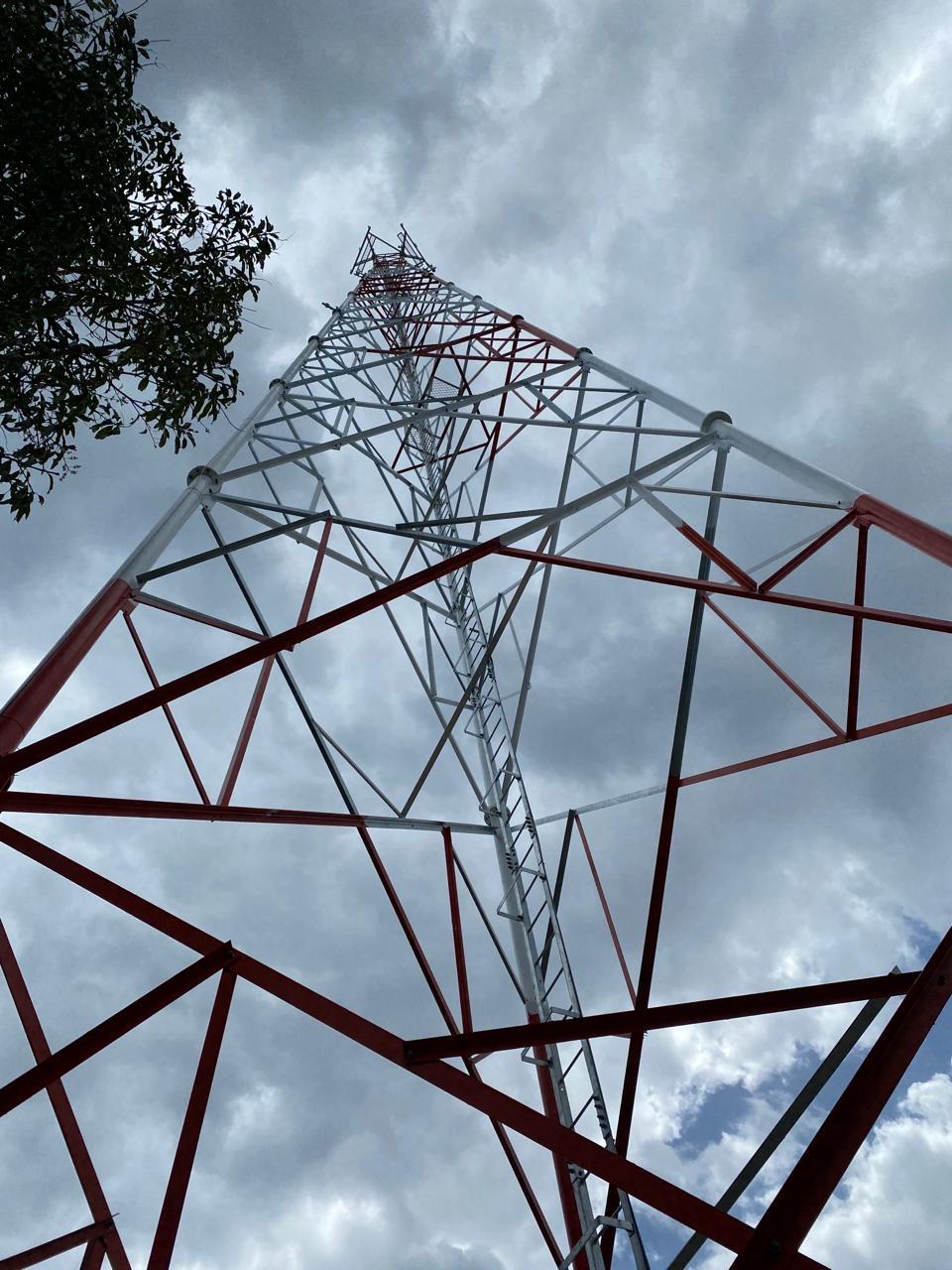
Market fluctuations in high-tensile steel directly affect pricing. Most commercial structures utilize S355 or Q345 structural steel. These high-yield grades offer excellent strength-to-weight ratios. When global steel indices spike, your CapEx quote will follow immediately. Furthermore, taller structures require heavier wall thicknesses near the base flange. Thicker plates consume exponentially more raw material. Always lock in your steel pricing validity window when negotiating supplier contracts.
Manufacturing tubular sections requires intensive, specialized labor. Facilities use advanced CNC plasma cutters to shape raw steel plates. Heavy-duty hydraulic rollers then bend these plates into conical or cylindrical shapes. Finally, technicians apply submerged arc welding (SAW) to fuse the longitudinal seams. SAW provides deep penetration and structural integrity. These advanced machining hours form a massive chunk of your fabrication bill. Quality control here ensures the structure survives extreme weather.
The connection method heavily influences manufacturing costs. Engineers generally choose between flanged joints and slip joints. We break down the differences below to help you evaluate your options.
Connection Type | Manufacturing Process | Material Usage | Cost Impact |
|---|---|---|---|
Flanged Connection | Requires welding heavy steel plates and precision CNC drilling for bolt holes. | High. Consumes thick steel plates and heavy-duty galvanized bolts. | Higher fabrication cost due to extensive machining and extra material. |
Slip-Joint Connection | Requires high-precision rolling to ensure tight tolerance friction-fitting. | Low. Uses the existing tube body overlapping itself. No extra plates. | Lower material cost, but requires strict factory tolerance control. |
Corrosion protection represents a vital stage in structural manufacturing. Facilities generally quote galvanizing costs per ton of steel processed. Zinc is a globally traded commodity. When zinc prices rise, dipping costs increase proportionally. Since the entire structure undergoes full immersion, heavier poles naturally consume more zinc. Budgeting 10% to 15% of your fabrication cost for this surface treatment is a standard industry practice.
You must mandate strict compliance with global coating standards. ISO 1461 and ASTM A123 dictate specific zinc coating thicknesses. Outdoor structures typically require a minimum of 85 microns of zinc coverage. Strict adherence prevents premature steel failure in harsh environments. Do not accept quotes lacking a commitment to these standards. Thinner coatings save the supplier money but leave your infrastructure vulnerable to rapid environmental degradation.
Dipping hollow structures presents unique engineering challenges. Tubular sections require precise vent and drain holes. These holes allow molten zinc to flow freely inside the tube. More importantly, they allow superheated air to escape. If a manufacturer places vent holes incorrectly, trapped air can cause internal explosions in the 450°C zinc bath. Poorly designed venting also leaves internal surfaces uncoated. Correcting these errors leads to severe rework costs and delayed shipping schedules.
Shipping hollow tubes fundamentally changes freight calculations. Logistics companies charge based on dimensional weight when volume exceeds physical weight. Long, empty steel tubes take up massive amounts of space inside cargo ships and trucks. You are essentially paying to transport empty air. This volume-heavy profile makes tubular structures notoriously expensive to ship if poorly packaged.
Smart manufacturers use a technique called nesting to solve volume issues. They engineer the structure in tapered sections of varying diameters.
The factory slides the narrowest top section inside the middle section.
They slide this combined unit inside the wide base section.
They secure the nested tubes with timber blocks and strapping to prevent transport damage.
This industry practice maximizes payload density. Nesting allows multiple 30m structures to fit efficiently inside standard 40ft HQ containers. It drastically reduces ocean freight expenses.
Your transport budget must cover three distinct journey phases.
Factory to Port (FOB): Local trucking costs to move the cargo from the manufacturing floor to the export terminal.
Ocean Freight (CIF): Container shipping across the ocean. Prices vary wildly based on global shipping lane demand.
Last-Mile Delivery: Inland transport from the destination port to the final installation site.
Remote sites heavily penalize your budget. Delivering 10-meter-long steel sections over unpaved mountain roads requires specialized flatbed trucks. Last-mile flatbed delivery often carries high premiums and requires careful route surveys beforehand.
Foundation requirements represent a massive, often hidden CapEx line item. Tower manufacturer quotes rarely include civil works. Your local engineers must conduct thorough soil testing. Bedrock requires expensive drilling equipment, while sandy soil demands wider, deeper concrete footings. You must budget for excavation, heavy rebar cages, and bulk concrete pouring. Foundation materials and labor easily consume 15% to 20% of your total project budget.
Erecting a 30m structure requires serious lifting power. You need a mobile crane capable of handling a 30m+ lift radius while managing heavy steel sections.
Common mistakes to avoid during rigging planning:
Underestimating crane mobilization fees (the cost simply to drive the crane to the site).
Ignoring local daily rental minimums (many operators charge a full day even for a 4-hour job).
Failing to clear overhead obstacles, causing expensive hourly delays on erection day.
Crane mobilization, daily rental rates, and certified operator fees act as major local variables. These costs compound quickly if site delays occur.
Installation requires highly trained crews. You cannot use standard construction labor. Certified climbers handle high-altitude bolting and rigging. Safety and certification requirements drive up their hourly rates. The connection type you chose earlier impacts this stage. Flanged designs often require faster bolt-up times in the air. Slip joints require specialized hydraulic jacking devices to pull the sections tightly together. Faster assembly means fewer billable crew hours.
Procurement teams must normalize bids by checking the total specified weight. Compare the total metric tonnage offered by each supplier. A suspiciously cheap quote often indicates hidden compromises. The supplier likely thinned the steel plates or assumed a lower wind load capacity. If Supplier A quotes 3 tons and Supplier B quotes 2.2 tons for the same 30m height, Supplier B has removed structural mass. Thinner structures sway excessively and risk catastrophic buckling.
Examine the quote for missing accessories. Verify exactly what the ex-works price includes. Foundation anchor bolts, heavy hex nuts, and alignment templates are critical components. Unscrupulous suppliers omit these heavy items from the initial bid to look cheaper. They later bill them as expensive add-ons. Insist suppliers list foundation hardware as a separate, guaranteed line item on the proforma invoice.
Incomplete paperwork derails municipal permitting processes. You must demand strict documentation from your supplier. Warn your team against quotes lacking Material Test Reports (MTRs). You also need independent weld inspection certificates, such as Non-Destructive Testing (NDT) reports. Ultrasonic testing proves the internal integrity of the welded seams. If you cannot produce these certificates, local building inspectors will halt your erection phase. Getting post-manufacturing certifications is nearly impossible and incredibly costly.
A 30m galvanized steel structure operates as a front-loaded investment.
Precise engineering upfront minimizes excessive material costs and avoids structural failure.
Smart design choices, like nesting and slip joints, significantly reduce ocean freight volume.
Thorough site planning controls unpredictable crane and civil foundation expenses.
Next step: Procurement teams must finalize their geotechnical site surveys and exact wind load requirements before requesting formal RFQs. This ensures all suppliers bid on identical parameters, yielding accurate and comparable pricing.
A: Standard lead times require 3 to 6 weeks for fabrication and hot-dip galvanizing. Ocean shipping typically takes 2 to 4 weeks depending on the destination port. Once components arrive on site, foundation curing requires up to 28 days. Erection itself takes only 3 to 7 days. Site permitting timelines remain excluded from this estimate.
A: No. A common misconception is that enclosed tubes rust rapidly from the inside. Full-immersion hot-dip galvanizing coats both the exterior and interior walls simultaneously. Provided the manufacturer positions drain holes correctly and caps the top section to prevent rainwater pooling, the interior remains highly protected. It does not require internal painting.
A: Overseas manufacturers leverage lower raw material and factory labor costs, reducing the initial ex-works price. However, you must trade these savings against higher ocean freight costs and import tariffs. Sourcing overseas also necessitates strict third-party QA/QC oversight prior to container loading to ensure weld quality and standard compliance.


