


Views: 0 Author: Site Editor Publish Time: 2025-06-18 Origin: Site


Infrastructure development for power transmission and telecommunications often demands the installation of towers in some of the most challenging environmental and geographical conditions. From rugged mountain ranges and dense forests to coastal zones with salty air and remote desert landscapes, these terrains pose unique difficulties. Engineers and project planners must carefully consider these factors to ensure structural integrity, ease of installation, longevity, and cost-effectiveness.
Angular towers have long been recognized as a reliable and versatile solution for such demanding scenarios. Their design, materials, and construction methods provide distinct advantages that overcome many of the obstacles presented by harsh environments and difficult terrain.
Building infrastructure towers in harsh environments comes with a suite of challenges that affect every phase of the project—from transportation and assembly to operation and maintenance.
Difficult Terrain: Mountainous slopes, rocky outcrops, dense vegetation, and uneven soil conditions complicate site access and tower foundation design.
Remote Locations: Many sites lack developed road networks or heavy machinery availability, increasing logistical complexity and costs.
Extreme Weather: Areas exposed to strong winds, heavy snowfall, ice accumulation, intense sun exposure, or corrosive saline air impose additional loads and accelerate material degradation.
Limited Construction Resources: Onsite welding or large cranes may not be feasible, requiring alternative construction and assembly methods.
Environmental Regulations: Sensitive ecosystems require minimizing disturbance and using eco-friendly construction practices.
Effectively addressing these challenges demands a tower design that is not only structurally sound but also easy to transport, assemble, and maintain under tough conditions.
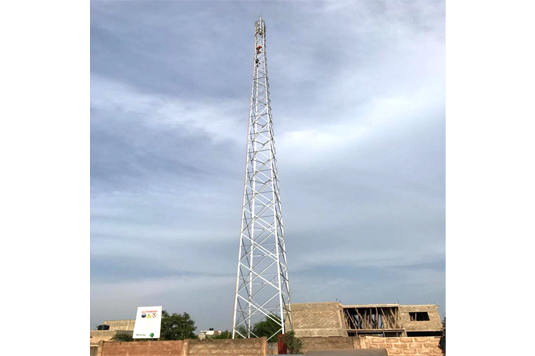
Angular towers, sometimes referred to as lattice towers, are constructed using angle steel sections joined by bolted connections to form a lattice framework. This design offers multiple practical benefits in the context of harsh environments and difficult terrain.
One of the biggest obstacles in harsh or remote areas is transporting tower components to the site and assembling them safely and efficiently.
Prefabricated Modular Components: Angular towers are fabricated into modular sections composed of lightweight angle steel. These sections can be easily packed and transported even over narrow, winding, or unpaved roads common in remote regions. Smaller, standardized pieces simplify logistics compared to bulky or heavy structures.
Bolted Assembly Method: Unlike welded structures, angular towers use bolted joints for connecting components. This means on-site welding—which requires skilled labor, specialized equipment, and time—is eliminated. Bolted assembly is faster and can be performed with basic tools, making it ideal where heavy machinery or welders are unavailable.
Reduced Need for Heavy Machinery: Because of the manageable size and weight of the components, cranes or heavy lifting equipment may not be necessary, or their use can be minimized. Tower sections can be erected using smaller cranes or even manual labor in particularly difficult terrain, reducing overall installation costs and complexity.
Faster Installation Time: Modular construction and simple connections lead to quicker assembly, minimizing time spent exposed to potentially dangerous weather or unstable ground.
Angular towers’ lattice structure inherently provides great adaptability, which is crucial when dealing with uneven or challenging ground conditions.
Adjustable Base and Frame: The open lattice design allows engineers to customize the tower’s base and framing elements to accommodate uneven land surfaces. Legs can be designed with adjustable footings or extended to fit sloped terrain without compromising stability.
Suitability for Various Environments: Whether it’s a steep mountain slope, a coastal zone with saline winds, a desert with extreme temperature variations, or a dense forest with complex foundation challenges, angular towers can be engineered to meet the specific demands of the site.
Resistance to Environmental Loads: The lattice framework distributes loads efficiently and allows wind, snow, and ice to pass through, reducing pressure on the structure compared to solid towers. This adaptability improves resilience in dynamic environmental conditions such as high wind speeds or seismic activity.
Ease of Modification: Should environmental conditions or project needs change, angular towers can be modified or extended more easily than monolithic structures. Additional bracing, antenna mounts, or other equipment can be bolted on without significant rework.
Long-term performance in harsh environments depends heavily on protection against corrosion and material degradation. Angular towers from GTE are built with durability in mind.
Hot-Dip Galvanized Coating: One of the most effective ways to protect steel structures from rust and corrosion is hot-dip galvanizing. This process applies a thick zinc coating to all steel components, creating a robust barrier against moisture, salt, and other corrosive elements.
Tested for Extreme Weather Durability: GTE’s coating systems undergo rigorous testing to ensure they withstand the rigors of environments such as humid coastal areas, industrial pollution zones, and regions with acid rain or heavy snowfall.
Long Service Life: The combination of galvanized protection and the angular tower’s open lattice design, which allows moisture to drain and air to circulate freely, extends the service life of the tower significantly.
Low Maintenance Requirements: Thanks to corrosion resistance and easy accessibility of individual components, angular towers require less frequent and less costly maintenance compared to other tower types.
Global Tower Engineering Co., Ltd. has successfully deployed angular towers in a variety of harsh environmental conditions worldwide. These projects demonstrate the adaptability and resilience of angular towers:
High-Altitude Power Transmission in Mountainous Regions: GTE supplied angular towers designed with reinforced bracing and customized footing systems to withstand heavy snow loads and strong winds at high elevations.
Coastal Telecommunication Installations: In areas exposed to saline air and corrosive sea spray, GTE’s hot-dip galvanized angular towers have maintained structural integrity for decades, providing reliable support for antennas and equipment.
Remote Desert Power Lines: Lightweight modular components facilitated transport across desert terrain, while corrosion-resistant coatings protected towers against extreme temperature fluctuations and sand abrasion.
These examples underscore the practical advantages of angular towers and GTE’s expertise in customizing solutions for site-specific challenges.
When infrastructure projects face harsh environments and difficult terrain, angular towers stand out as a superior choice. Their modular, lightweight design simplifies transport and onsite assembly, especially in remote or inaccessible areas. The structural adaptability of angular towers allows for customized foundations and framing suited to uneven or rugged landscapes. Coupled with advanced corrosion resistance treatments like hot-dip galvanizing, these towers offer remarkable longevity and minimal maintenance even under extreme weather and environmental stresses.
Global Tower Engineering Co., Ltd. (GTE) combines these proven design advantages with engineering expertise and quality manufacturing to provide towers that are not only products but comprehensive infrastructure solutions. With GTE’s support, project developers can confidently tackle the challenges posed by tough terrains and harsh conditions, ensuring safe, durable, and cost-effective power transmission and telecommunications networks.


