


Views: 0 Author: Site Editor Publish Time: 2025-07-03 Origin: Site


In modern power transmission and telecommunications infrastructure, towers play an essential role in supporting conductors, antennas, and other critical equipment. Among the various tower designs available, angular towers and tubular towers are two of the most commonly utilized types worldwide. Each offers distinct structural features and advantages that suit different project requirements and environmental conditions.
Understanding the fundamental structural distinctions between angular towers and tubular towers is the first step toward choosing the appropriate design for your infrastructure needs.
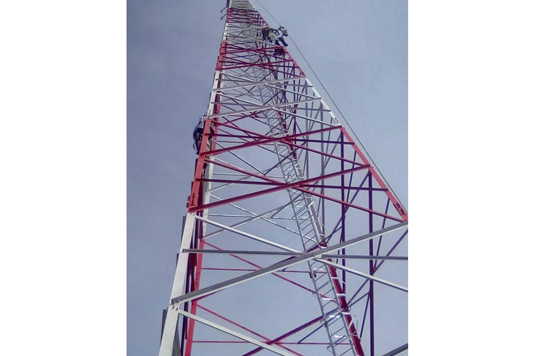
Angular towers, also known as lattice towers, are constructed from L-shaped angle steel sections. These components are assembled into a lattice framework using bolted connections, forming a geometric pattern of interconnected steel members that provide high strength and stability.
The open lattice structure allows angular towers to distribute mechanical loads efficiently while using less material, resulting in a lightweight yet robust construction. The bolted assembly facilitates modular fabrication, allowing sections to be manufactured offsite and easily transported to the installation location for quick assembly. This modularity also simplifies maintenance and future modifications.
Typical angular towers often have triangular or square cross-sections, with each leg composed of multiple angle steel members connected via horizontal and diagonal bracing. The design ensures high resistance to bending, torsion, and shear forces generated by wind, ice, and the weight of conductors or antennas.
Tubular towers, by contrast, are made from hollow steel sections that can be either circular or square in cross-section. These hollow tubes are joined by welding or flanged connections to create a solid, smooth, and continuous surface.
Unlike the open lattice of angular towers, tubular towers have a sleek, enclosed appearance that offers advantages in terms of aerodynamics and aesthetics. The tubular design eliminates multiple bolted joints, reducing points of potential corrosion and maintenance.
The structural integrity of tubular towers relies on the strength of the hollow steel sections and the quality of the welds or flanges connecting them. Their continuous surface enables better resistance to dynamic loads such as vibration and oscillations caused by wind or seismic activity.
Both angular and tubular towers have unique benefits and limitations. Understanding these pros and cons helps in aligning tower choice with project goals.
Advantages:
Lightweight and Material Efficient: Due to the lattice design, angular towers use steel efficiently, making them lighter than comparable solid structures.
Ease of Fabrication: Constructed from standardized angle steel and assembled with bolted joints, angular towers are easier and quicker to manufacture.
Lower Cost: Reduced material requirements and simpler manufacturing processes translate to lower production and transportation costs.
Ease of Maintenance: The bolted construction allows for straightforward inspection, repair, and replacement of components.
Modular and Flexible: Sections can be customized and modified easily to meet varying height and load requirements.
Disadvantages:
Moderate Aerodynamics: The lattice framework increases wind drag and turbulence compared to smooth tubular surfaces.
Industrial Appearance: The open lattice design has a rugged, utilitarian look that may be less suitable in urban or aesthetic-sensitive areas.
More Surface Area: The numerous steel members expose more surface area to corrosion, requiring adequate protective coatings.
Advantages:
Superior Aerodynamics: The smooth, enclosed surface of tubular towers reduces wind resistance, minimizing vibration and oscillations.
Aesthetically Pleasing: Their sleek and modern design makes tubular towers more visually acceptable in urban and suburban environments.
Durability: Fewer joints reduce corrosion risks and maintenance needs, contributing to longer service life.
Structural Strength: Better performance under dynamic loading conditions, including seismic and wind-induced forces.
Disadvantages:
Higher Cost: Manufacturing tubular towers involves complex welding and fabrication processes that increase production expenses.
Complex Maintenance: Welded joints and enclosed design require specialized maintenance approaches.
Transportation Challenges: Due to their size and shape, tubular tower sections may require special handling and transportation logistics.
Selecting the right tower type depends on a combination of technical, environmental, financial, and aesthetic considerations.
The accessibility and terrain of the construction site influence tower selection significantly. Angular towers, with their modular and lightweight components, are easier to transport and install in remote or mountainous regions where heavy machinery access is limited. Their parts can be shipped in compact bundles and assembled onsite with less equipment.
On the other hand, tubular towers, given their larger, solid sections, are better suited to locations with good transportation infrastructure, such as urban or industrial areas.
Load capacity and resistance to environmental forces such as wind, snow, and seismic activity are paramount. Tubular towers generally offer better aerodynamic performance and structural resilience under harsh weather, making them suitable for areas with extreme environmental conditions.
Angular towers, however, provide excellent strength-to-weight ratios and can be engineered to meet most load requirements at a generally lower cost.
If budget is a critical factor, angular towers tend to be more cost-effective both in initial construction and ongoing maintenance, thanks to their simpler design and ease of repairs.
Tubular towers, while more expensive upfront, may offer savings over time through lower maintenance and longer lifespan in certain environments.
Urban projects or areas with strict aesthetic regulations may favor tubular towers for their sleek design. Meanwhile, in industrial or remote zones where functionality is prioritized over appearance, angular towers are more common.
Angular towers are widely used in:
High-Voltage Power Transmission: Their ability to span long distances and support heavy conductors makes them ideal for electrical grids, especially in rugged or remote terrains.
Telecommunications in Rural Areas: Their modularity allows easy addition of antennas and equipment for expanding network coverage.
Infrastructure Projects with Budget Constraints: Their lower cost and ease of fabrication suit large-scale projects with tight budgets.
Tubular towers find application in:
Urban Telecommunication Base Stations: Their aesthetic appeal suits cityscapes and suburban settings.
Sites with Harsh Weather: Areas prone to strong winds, heavy snowfall, or seismic activity benefit from tubular towers’ aerodynamic and structural properties.
Specialized Communication Installations: Situations requiring vibration resistance and minimal maintenance.
Global Tower Engineering Co., Ltd. (GTE) offers extensive expertise in designing and manufacturing both angular and tubular towers, delivering high-quality solutions tailored to diverse project needs.
Manufacturing Excellence: GTE uses premium steel grades and advanced fabrication techniques adhering to IEC, ISO, and GB standards to ensure structural integrity and safety.
Customization: Whether the project demands towers adapted to challenging terrains, specific load requirements, or aesthetic preferences, GTE provides flexible engineering designs and customized manufacturing.
Protective Treatments: GTE applies hot-dip galvanizing and other anti-corrosion coatings to extend the service life of its towers, especially in harsh environments.
Technical Support and Consulting: GTE’s experienced engineers collaborate with clients from project planning to installation, ensuring optimal tower selection and performance.
Proven Track Record: With successful projects spanning power transmission lines and telecom infrastructure worldwide, GTE is a reliable partner for infrastructure developers.
Choosing between angular towers and tubular towers requires a careful assessment of multiple factors including structural needs, environmental conditions, budget, and aesthetic requirements. Angular towers excel in cost-effectiveness, ease of fabrication, and suitability for challenging terrains, making them a preferred choice for many power transmission and rural telecom projects. Meanwhile, tubular towers offer superior aerodynamics, modern appearance, and resilience to dynamic forces, favored in urban and harsh weather conditions despite higher costs.
For infrastructure projects aiming for long-term reliability and efficiency, partnering with an experienced manufacturer like Global Tower Engineering Co., Ltd. (GTE) ensures access to high-quality, customized tower solutions. GTE’s comprehensive design, production, and consulting services help clients select the ideal tower type, tailored precisely to their project’s unique requirements.
Make informed tower choices today to build safer, more efficient, and future-proof power and telecommunication networks.


