


Views: 0 Author: Site Editor Publish Time: 2026-06-08 Origin: Site


Expanding rural broadband and 5G networks presents a massive infrastructure challenge. Network operators demand structural assets balancing rapid deployment logistics against decades of environmental resilience. High-load, permanent installations require incredibly stable foundations to function properly. The galvanized angular tower remains a dominant choice over monopoles or guyed masts. It provides predictable budget parameters and unmatched structural rigidity. Choosing the wrong tower type leads to severe maintenance issues and unsafe payload conditions.
This article provides procurement teams and network engineers an objective evaluation framework. You will learn how to effectively evaluate, specify, and source angular lattice structures for outdoor telecommunications projects. We will explore structural mechanics, evaluate galvanization standards, and identify common rollout risks. By the end, you will understand how to partner effectively during the procurement phase.
Cost-to-Strength Ratio: Angular steel profiles provide exceptional load-bearing capacity for heavy telecom equipment at a lower manufacturing cost than tubular alternatives.
Logistical Efficiency: Lattice structures ship flat, significantly reducing international freight costs and enabling delivery to remote, hard-to-access sites.
Lifecycle Longevity: Standardized hot-dip galvanization (ASTM/ISO compliant) creates a metallurgical bond that prevents corrosion, ensuring a 30–50 year service life with minimal maintenance.
Site Versatility: Modular, bolted assembly allows for scalable height adjustments and straightforward structural reinforcement as network hardware payloads increase.
Network operators face continuous pressure during site development. They must deploy multiple heavy antennas and Remote Radio Units (RRUs). They must achieve this safely. They cannot exceed strict budget constraints. Engineering teams often select the telecom angular tower to resolve these specific challenges.
Structural mechanics play a crucial role here. The 3-legged or 4-legged lattice design operates on simple but powerful geometry. It distributes vertical and horizontal stresses downward. Wind loads push against the antennas at the top. The lattice framework transfers this horizontal force diagonally. It converts these forces into axial compression and tension. The foundation then safely absorbs these loads. This prevents catastrophic bending under extreme weather conditions.
Material predictability further drives this engineering preference. Manufacturers rely on standard structural steel grades. You will typically see materials classified under specific global standards:
Q235 Steel: Offers a yield strength of 235 MPa. Engineers use it for standard structural elements.
Q355 Steel: Provides a higher yield strength of 345 MPa. It serves well for main leg members requiring extra capacity.
Q420 Steel: The European equivalent standard. It ensures high tensile strength for demanding international projects.
Using standard grades ensures consistent yield strength. It guarantees global material availability. It allows verifiable compliance alongside international building codes like TIA-222-H. Finally, angular towers offer excellent payload scalability. Network hardware payloads continually increase. The inherent geometry allows high adaptability. Teams can bolt on additional reinforcing cross-members later. They do not need to dismantle the existing structure to upgrade it.
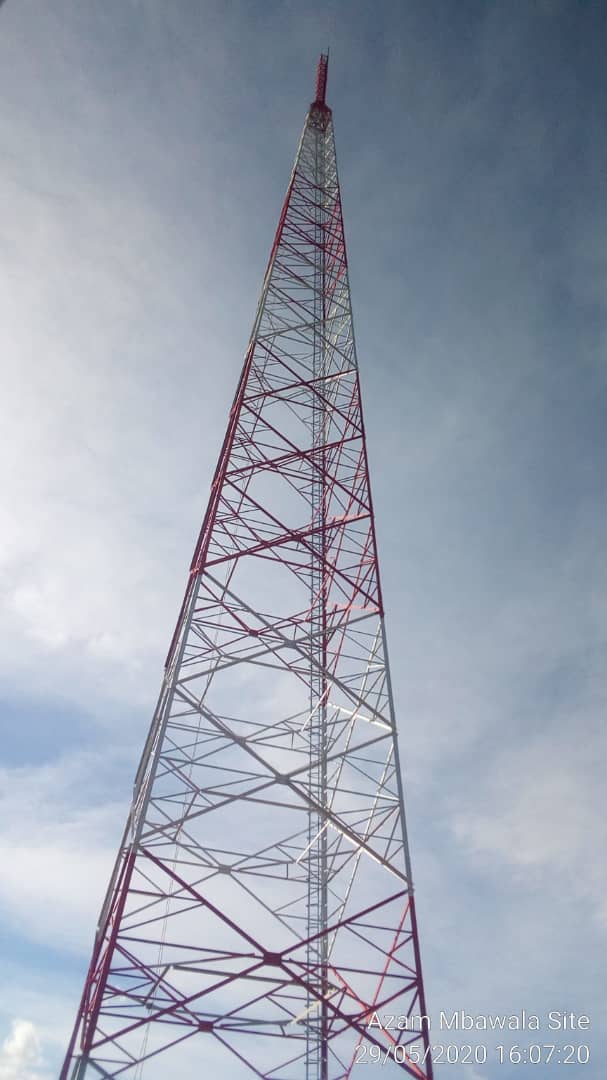
Outdoor infrastructure faces harsh environmental realities. Painted or electro-galvanized coatings often fail rapidly. High-humidity, coastal, or industrial environments break down inferior coatings. This failure leads to unacceptable maintenance expenses. Operational budgets drain quickly when crews must constantly repaint rusting steel.
A hot dip galvanized tower eliminates these financial drains. It provides a massive chemical advantage. The hot-dip process creates a zinc-iron metallurgical bond. The steel substrate actually alloys into the zinc coating. Engineers require standard thickness parameters to withstand continuous outdoor exposure. Most global specifications demand an 86-micron coating thickness. This aligns directly alongside ISO 1461 compliance standards.
Damage tolerance separates hot-dip galvanizing from surface paints. Paints simply cover the steel. If a scratch occurs, moisture enters. Rust propagates beneath the paint layer causing it to blister. Hot-dip galvanizing offers cathodic protection instead. The zinc acts as a sacrificial anode. It corrodes before the underlying steel does. Minor scratches from transportation or harsh installation environments will not result in localized rust propagation. The zinc literally protects adjacent exposed steel.
Always specify ISO 1461 or ASTM A123 compliance in procurement documents.
Request independent coating thickness reports before accepting shipment.
Avoid mixing galvanized and non-galvanized hardware to prevent galvanic corrosion.
Engineers often debate between angular and tubular tower designs. Making the right site-specific choice requires a balanced comparison. We must evaluate several distinct solution categories to decide properly.
First, we acknowledge wind resistance differences. Tubular towers offer lower wind drag coefficients. The round profile allows air to slip past easily. They remain ideal for extreme typhoon zones. However, they cost much more to produce.
Angular towers require far less complex fabrication. Manufacturers do not need pipe bending machines. They avoid complex robotic welding processes. Simple cutting, punching, and stamping keeps manufacturing highly cost-effective.
Shipping and freight present the primary differentiator. Angular components nest tightly inside standard shipping containers. A standard 40-foot container holds a massive amount of flat-packed angular steel. Tubular sections suffer from volumetric inefficiency. You end up paying to ship empty air inside the tubes. This heavily reduces international logistics costs for angular profiles.
Assembly reality also differs on site. Angular towers rely entirely on standard bolted connections. This simplifies on-site assembly dramatically. However, it requires strict quality assurance regarding bolt tensioning. Crews must torque every single bolt correctly.
Evaluation Metric | Angular Lattice Tower | Tubular Lattice Tower |
|---|---|---|
Wind Drag Coefficient | Higher (flat surfaces catch wind) | Lower (round surfaces deflect wind) |
Fabrication Complexity | Low (cutting and punching) | High (bending and heavy welding) |
Shipping Efficiency | Excellent (flat nesting components) | Poor (high volumetric waste) |
Assembly Method | 100% bolted connections | Bolted flanges and welded nodes |
Procurement teams must look beyond the initial purchase price. Successful rollouts depend on several key evaluation dimensions. These criteria determine long-term project viability.
First, assess the site and foundation footprint. You must calculate the required base spread. Angular towers require a larger land footprint than monopoles. They need a wider stance to maintain stability. Procurement teams must factor this into land lease agreements. A cheaper tower might require a more expensive land lease. You must balance these factors carefully.
Second, ensure strict local compliance regarding wind load ratings.
Third, evaluate access and safety features. Maintenance crews will climb these structures for decades. The design must include specific safety elements. You should mandate anti-climb devices to prevent unauthorized access. Specify standardized rest platforms at regular intervals. Ensure the tower includes fully compliant fall-arrest systems. Worker safety remains non-negotiable.
Failing to specify the correct wind zone for the destination site.
Ignoring the foundation design costs when comparing monopoles to lattice towers.
Accepting generic engineering drawings instead of site-specific structural calculations.
Paper plans often clash against harsh implementation realities. Project managers must anticipate rollout risks proactively. Assembly quality control stands out as a major hurdle. Mismatched hardware halts progress instantly. Missing bolts delay entire construction schedules. We emphasize the need for factory pre-assembly. Reputable manufacturers conduct trial assemblies in their yard. They build one complete tower before shipping the batch. This ensures all bolt holes align perfectly.
Foundation delays frequently derail project timelines. Civil works require extensive preparation. Concrete needs a full 28-day curing time to reach maximum strength. Tower delivery must synchronize carefully alongside foundation readiness. Delivering steel too early leads to chaotic site storage. Delivering it too late wastes expensive crane rental days.
Galvanization flaking presents another severe risk. Subpar manufacturing processes ruin product lifespan. Poor temperature control during the hot-dip process creates problems. It leads to overly thick, brittle zinc layers. When crews tighten the bolts on site, these brittle layers crack. The zinc flakes off completely. This exposes bare steel to the elements immediately. You must vet your manufacturer's galvanizing facility thoroughly.
Selecting the right supplier dictates project success. You must move away from purely price-based decisions. Adopt a logic centered on risk-mitigated procurement. Cheap steel from an unverified factory costs more eventually. You need a partner capable of executing flawless logistics.
Demand complete documentation transparency from day one. Reputable suppliers willingly provide comprehensive paperwork. They will supply raw material mill test certificates (MTCs). These prove the steel grade matches your specifications. They will provide independent galvanization thickness reports. They will share verifiable structural calculation outputs. If a supplier hesitates to share these documents, walk away immediately.
Assess factory capacity and realistic lead times next. Look for robust CNC machining capacity. CNC equipment ensures high fabrication tolerances. Ask about their maximum monthly tonnage. Evaluate their ability to handle bulk orders. High volume should never compromise precision cutting and punching.
Take clear next steps to begin the quoting process. Compile a comprehensive site-data package. Include the required tower height and local wind speeds. List your specific payload specifications detailing antenna weights and dimensions. Send this package to your shortlisted manufacturers. Request an accurate engineering design and a detailed commercial quote.
The galvanized angular tower remains a foundational asset across global telecom infrastructure. It delivers an unmatched balance of freight efficiency and low procurement cost. It provides multi-decade reliability even in harsh environments. Network operators rely on these structures to scale their 5G networks confidently.
We strongly recommend prioritizing transparency during procurement. Choose manufacturers who openly share structural engineering calculations. Ensure they adhere strictly to international galvanizing standards like ISO 1461. Validate their factory capabilities before placing bulk orders.
Take action on your next deployment phase today. Contact our structural engineering team directly. Share your specific site payload data and local wind requirements. We will review your parameters carefully. You will receive a customized tower specification and a highly accurate deployment estimate.
A: Typically 30-50 years, depending on the corrosivity of the local environment and adherence to ISO/ASTM coating thickness standards.
A: Because components are stacked tightly, operators can fit significantly more tower units into a single 40ft container, reducing per-unit freight costs by up to 40% compared to pre-welded or tubular structures.
A: Assuming a cured foundation and an experienced crew, assembly typically takes 3 to 5 days, heavily dependent on site access and crane availability.


