


Views: 0 Author: Site Editor Publish Time: 2026-06-23 Origin: Site


Selecting the right structural framework represents a fundamental engineering dilemma. Project managers face complex decisions far beyond simple load capacity calculations. You must balance restrictive site constraints, complicated logistics, and extensive lifecycle variables simultaneously. Choosing incorrectly triggers severe installation delays and massive budget overruns.
We recognize these core infrastructure challenges clearly. Both lattice structures and tubular designs serve critical roles in modern grid networks. However, their specific structural mechanics dictate distinctly different use cases. Implementation realities often restrict your choices heavily. High wind zones demand specific aerodynamic profiles. Tight urban corridors mandate minimal footprints. Ignoring these geographic realities jeopardizes your entire rollout.
Our guide provides a rigorous framework for your upcoming evaluations. We deliver objective evaluation metrics without vendor bias. You will learn how aerodynamic forces dictate foundation sizing. We will explore how logistical hurdles impact material choices directly. Ultimately, we equip you to streamline your next procurement cycle confidently.
Logistics vs. Footprint: Angular towers offer superior modularity for remote, hard-to-access sites, whereas tubular towers are optimal for urban environments with strict spatial and aesthetic constraints.
Cost Dynamics: Angular configurations generally require lower initial material and fabrication costs but demand higher maintenance labor (bolt tightening), while tubular designs have higher upfront fabrication and transport costs but lower long-term maintenance.
Aerodynamic Performance: The open lattice structure of an angular tower significantly reduces wind drag compared to the solid surface area of a tubular structure, impacting foundation requirements.
Tower selection dictates your overall project viability. Engineering teams cannot view these structures merely as passive steel assets. They represent highly complex land-use challenges. Securing right-of-way acquisitions often delays critical grid rollouts. Zoning boards impose strict aesthetic compliance rules consistently. Your chosen structural profile dictates public approval odds. Installation timelines depend entirely on these foundational choices. You must align structural geometry perfectly alongside realistic deployment schedules.
Evaluate structures using objective, measurable factors. First, consider fabrication and transport expenses. Heavy manufacturing requires highly specialized facilities. Moving massive steel sections involves expensive flatbed transport over long distances. Next, evaluate foundation scaling strictly. Larger concrete bases require extensive excavation work. Consider your lifecycle maintenance obligations thoroughly. Crews must inspect and service structures decades after the initial installation.
Site accessibility limits your deployment options severely. Assess heavy-machinery constraints early during the planning phase. Local environmental variables demand careful structural review. High wind zones require specific aerodynamic profiles to prevent failure. Seismic activity mandates flexible steel configurations. Corrosive coastal environments test surface treatments heavily. We strongly advise conducting deep soil boring tests early. Understanding your local geotechnical baseline prevents disastrous foundation redesigns later.
Best Practice: Always finalize your site accessibility surveys before signing vendor contracts. Discovering a crane cannot reach your site post-purchase destroys project budgets.
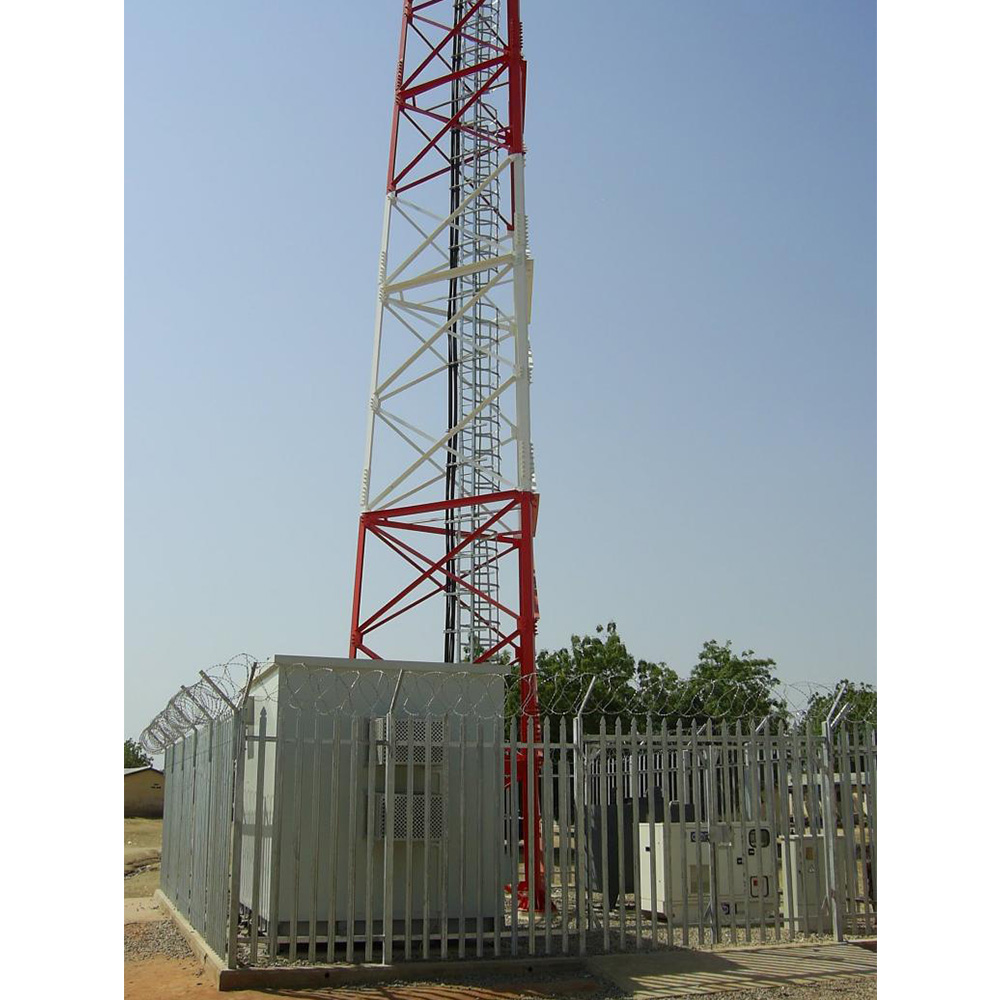
Engineers often call this configuration a lattice structure. The classic angular tower utilizes interconnected angle steel strictly. Crews bolt these steel members together meticulously on-site. This geometry distributes weight and tension evenly across the frame. Laced diagonal bracing transfers structural loads down toward the anchor points. This approach maximizes material efficiency brilliantly.
Logistical Flexibility: Manufacturers ship components in highly compact bundles. Standard flatbed trucks easily transport these loose steel sections. These bundles suit mountainous or remote regions perfectly. Heavy cranes rarely reach isolated mountain peaks safely. Crews assemble sections manually using basic gin poles. Helicopters can even drop bundles into roadless terrain.
Wind Resistance: High structural transparency defines this specific design. Wind simply passes straight through the open lattice framework. This transparency dramatically reduces destructive overturning moments. Less wind drag means significantly less foundation stress.
Foundation Footprint: This design requires a significantly larger foundation spread. Wide base configurations increase right-of-way land requirements heavily. Acquiring large land parcels in populated areas destroys initial budgets.
Maintenance Labor: Lattice designs remain highly maintenance-heavy. Hundreds of individual bolted joints demand ongoing attention. Crews must perform periodic torque inspections reliably. Wind vibrations slowly induce joint loosening over time.
Common Mistake: Project managers frequently neglect the six-month post-installation bolt tightening. Settling structures require immediate torque verification to prevent catastrophic vibration fatigue.
Tubular structures dominate modern urban skyline profiles everywhere. These include slender monopoles or multi-sided tubular steel towers. They feature hollow, multi-sided, or perfectly circular steel poles. Manufacturers assemble them utilizing heavy slip joints or flanged connections. High-strength steel plates form the primary load-bearing shell completely.
Spatial Efficiency: These masts feature a remarkably minimal base footprint. They represent the default standard for busy urban centers. Highway corridors and tight residential right-of-ways require this slender profile. You save massive amounts of capital on difficult land acquisitions.
Aesthetics and Zoning Compliance: Municipal zoning boards heavily favor clean visual profiles. Tubular structures blend into urban backgrounds easily. Residents rarely oppose these slender neighborhood installations. Fast-tracking municipal permits becomes much easier.
Security & Protection: External threats constantly jeopardize vital grid infrastructure. Internal cable routing protects vulnerable lines fully. Weather and vandalism cannot easily reach enclosed wiring. Every modern telecommunication tower leverages this internal security capability.
Transportation Constraints: Fabricators produce exceptionally large, heavy pre-fabricated sections. Moving these tubes requires specialized oversized transport logistics. You must navigate complex highway permitting processes carefully. Erecting them demands massive high-capacity cranes on-site.
Higher Wind Drag: The solid surface area acts identically to a massive sail. Wind cannot pass through the solid steel structure. This intense drag necessitates massive, deep-drilled concrete foundations. Excavating single-pier foundations requires heavy auger equipment.
Best Practice: Always ensure manufacturers design proper drainage holes near the base plate. Internal condensation pooling rapidly destroys tubular interiors if left trapped.
Evaluating these structures requires comparing core engineering metrics directly. Standard steel profiles keep lattice fabrication expenses low. Angle steel rolls off production lines very rapidly. Tubular designs require highly specialized plate bending machinery. Manufacturers perform extensive longitudinal welding to seal the large tubes. This intense fabrication process pushes upfront pricing much higher.
Erection methodologies differ vastly between the two options. Lattice assembly proves notoriously slow and labor-intensive. Technicians manually align and tighten hundreds of individual bolts. Conversely, tubular erection relies entirely on heavy lifting machinery. Massive cranes stack slip-joint sections rapidly within hours. You basically trade manual labor hours for expensive crane rental fees.
Both structures utilize hot-dip galvanization for vital rust protection. However, field realities diverge sharply regarding actual corrosion. Tubular interiors risk severe hidden corrosion issues constantly. Poorly ventilated tubes trap condensation inside the enclosed shell. Inspecting internal surfaces remains exceptionally difficult for maintenance teams. Angular steel remains fully exposed constantly. Inspectors easily spot rust or degradation during routine safety climbs.
Structural geometry dictates load-handling traits entirely. Tubular structures struggle heavily against extreme torsional stress. Heavy, asymmetric loads twist the solid pole under high winds. A massive ten-foot microwave dish acts like an aerodynamic sail. Lattice frameworks handle these top-heavy equipment loads much better. Their wide stance resists twisting forces highly effectively. They support heavy directional dishes alongside standard transmission lines effortlessly.
Evaluation Dimension | Angular (Lattice) Structure | Tubular (Monopole) Structure |
|---|---|---|
Component Fabrication | Standard angle steel, fast manufacturing output | Custom plate bending, complex longitudinal welding |
Transport Modality | Compact bundles, standard flatbed trucks | Oversized loads, specialized heavy haulers |
Installation Speed | Slow, labor-intensive manual bolting | Rapid, crane-dependent section stacking |
Visual Impact | High industrial footprint, broad profile | Low-profile, sleek aesthetic integration |
Maintenance Needs | High (frequent bolt torque checks required) | Low (minimal exposed exterior joints) |
Foundation Style | Wide spread footings across multiple anchor points | Deep drilled single piers, high concrete volume |
Selection requires a straightforward shortlisting framework. Base your logic entirely on hard site realities. Avoid letting aesthetic preferences override structural engineering necessities.
Choose an angular approach when the site terrain remains remote or mountainous. Select this option if land acquisition costs remain cheap locally. Use it if footprint restrictions simply do not exist. It remains ideal when your initial capital budget remains highly constrained. Finally, utilize it when heavy cranes cannot access the final installation pad.
Choose a tubular approach when you target an urban or suburban deployment zone. Select this if local authorities enforce strict zoning aesthetics rigidly. Use it when available right-of-way space remains severely limited. Ensure your site guarantees heavy machinery access easily. Every modern tubular tower deployment relies on these precise logistical conditions.
Selecting between these structural formats requires careful, objective deliberation. Neither tower type proves universally superior across all scenarios. The optimal choice depends entirely on intersecting site variables. You must evaluate site geography, regulatory environments, and logistical access equally. Overlooking local zoning laws guarantees expensive project delays. Ignoring soil conditions causes massive foundation budget blowouts instantly.
We strongly encourage procurement teams to finalize site surveys early. Complete all geotechnical reports before committing to any structural typology. Accurate soil data prevents massive redesign fees later. Protect your infrastructure investments by consulting certified structural engineers directly. Analyze your payload requirements meticulously to avoid dangerous torsional twisting. Request a comprehensive, site-specific load analysis from a qualified manufacturing partner today.
A: Tubular towers are faster to erect if heavy cranes are present; angular towers take longer due to manual bolt assembly but require less heavy machinery.
A: Both are engineered to meet specific load requirements, but angular towers handle extreme wind loads more efficiently due to their open lattice design.
A: Tubular towers typically require deep, single-pier drilled foundations due to a concentrated footprint and high overturning moments. Angular towers use spread foundations across three or four separate, shallower anchor points.
A: It is generally cost-prohibitive and logistically impractical due to the difficulty of transporting massive steel tubes up narrow, unpaved mountain roads.


