


Views: 0 Author: Site Editor Publish Time: 2026-06-18 Origin: Site


Utility companies and EPC contractors face immense pressure today. Grid modernization mandates demand rapid infrastructure upgrades across aging utility networks. Extreme weather events force structural engineers to rethink grid resilience entirely. Furthermore, securing new Rights-of-Way (ROW) becomes increasingly difficult amid soaring land costs and community opposition. To navigate these complex hurdles, the power sector is rapidly shifting away from traditional lattice structures. Many planners now replace treated wood poles with engineered tubular steel solutions for specific environments.
We wrote this comprehensive guide to provide a transparent evaluation of these modern structures. You will discover the operational, financial, and logistical trade-offs of using them in your next grid expansion. This detailed breakdown helps you make smarter project specification and procurement decisions. We aim to equip you with the technical facts necessary for modern grid planning.
Reduced ROW Requirements: Tubular steel structures require a significantly smaller footprint, minimizing land acquisition costs and streamlining zoning approvals in urban and suburban corridors.
Enhanced Resilience: Monopole and tubular designs offer superior performance against extreme wind and ice loading, reducing outage risks.
Lower Lifecycle Costs: Despite higher initial material costs compared to lattice or wood, the reduction in maintenance, faster assembly, and longer lifespan yield a competitive Total Cost of Ownership (TCO).
Logistical Trade-Offs: Implementation requires factoring in specialized transportation for heavy segments and specialized foundation engineering (e.g., drilled shafts).
Power delivery systems across the globe suffer from severe bottlenecks. Aging infrastructure struggles to handle increased load demands. Escalating land costs make expanding these grids financially daunting. Planners also face fierce public opposition. Communities often fight visually intrusive grid expansions. This phenomenon, known as NIMBYism (Not In My Back Yard), frequently stalls critical utility projects for years.
You must define clear success criteria to overcome these challenges. A successful modern power transmission tower project must pass environmental and zoning reviews quickly. It should also minimize lifetime maintenance requirements. Meeting these criteria guarantees a reliable, long-lasting power grid.
Engineers evaluate structural solutions based on these exact parameters. Traditional structures often fail to meet modern community expectations. Wood poles degrade and require chemical treatments. Lattice towers consume vast amounts of land. Planners need a superior alternative to bridge this gap. Modern engineered structures provide this necessary balance.
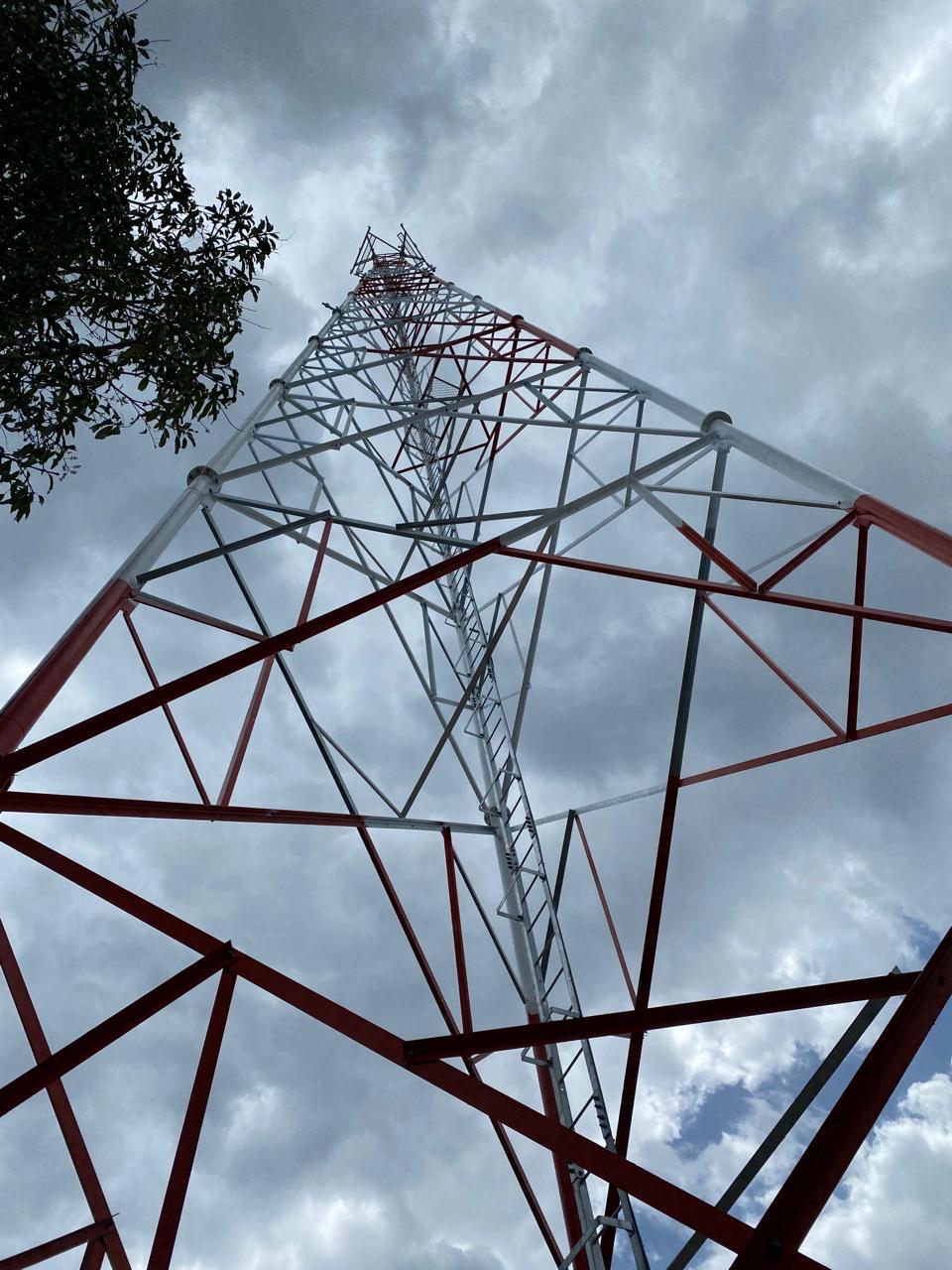
Modern grid designs demand exceptional performance under stress. Engineered steel monopoles deliver specific advantages over alternative structures. They solve several fundamental engineering challenges.
Continuous steel construction eliminates thousands of bolted connections. These joints often fail or require frequent maintenance in traditional lattice towers. Aeolian vibration naturally loosens hardware over time. Eliminating these nodes drastically improves overall structural integrity.
Monopoles offer superior flexibility. They distribute heavy loads evenly during high-wind and heavy ice conditions. The predictable yield strength of fabricated steel allows engineers to model extreme weather scenarios accurately. They bend significantly before structural failure occurs. This elasticity prevents catastrophic line drops during hurricanes or blizzards.
Best Practice: Always specify highly galvanized or weathering steel (Corten) for coastal environments. This prevents salt-spray corrosion and maintains structural integrity for decades.
Land consumption remains a critical metric for utility planners. A single steel tubular tower requires a fraction of the base area of a comparable lattice tower. A large lattice structure might require a 20-by-20-foot base spread. A heavy-duty monopole often needs only a 4-to-6-foot diameter foundation.
Community acceptance heavily favors aesthetic integration. Monopole designs look cleaner and less industrial. They blend easily into urban distribution and transmission lines. You can even paint them to match local environmental color palettes. This reduces visual clutter and eases zoning board approvals.
Avian-related outages plague traditional lattice lines. Birds build large nests inside the complex angular steel frameworks. Smooth surface structures actively prevent bird nesting. This lowers outage frequencies and simplifies environmental compliance.
Security also improves with closed designs. These structures lack lower climbing steps. This deters unauthorized access and localized vandalism. Copper theft and tampering drop significantly when intruders cannot scale the structures easily.
Financial evaluations must look far beyond the initial purchase order. You must adopt a balanced financial framework. This ensures you capture the true long-term value of your infrastructure.
Tubular steel features a higher upfront material and fabrication cost than wood or lattice steel. Plate rolling, seam welding, and hot-dip galvanizing require specialized manufacturing facilities. These processes drive up the initial price per ton. However, you recover these expenses rapidly during the installation and operation phases.
The smaller footprint directly translates to massive financial savings. Urban land costs continue to skyrocket. Purchasing a narrow 10-foot easement costs significantly less than a 50-foot easement. You save millions in direct land acquisition. You also avoid costly, protracted legal friction with local property owners.
Field labor represents a massive portion of any utility budget. Slip-joint or flanged connection designs require far less field assembly time. Crews simply jack slip-joints together or bolt large flange plates. They avoid erecting hundreds of individual lattice members.
This efficiency lowers costly on-site crane rentals. It dramatically reduces crew hourly wages. You can often stand a complete monopole in a single afternoon. Lattice structures might take days to assemble fully.
You must factor in the 30+ years lifecycle of galvanized steel. Wood poles rot, warp, and suffer woodpecker damage. Lattice towers require endless bolt-tightening campaigns. Tubular structures require virtually zero mid-life maintenance. You avoid anti-corrosion touch-ups and hardware replacements. This preserves your operational budget for decades.
Feature | Wood Poles | Lattice Steel | Tubular Steel |
|---|---|---|---|
Initial Material Cost | Low | Medium | High |
ROW Footprint Need | Small | Very Large | Small |
Field Assembly Speed | Fast | Slow | Very Fast |
Maintenance Burden | High (Rot, Pests) | High (Bolts, Rust) | Very Low |
Expected Lifespan | 30 - 40 Years | 50 - 70 Years | 50 - 80+ Years |
Adopting these engineered structures introduces new project friction points. You must understand the logistical and civil engineering shifts required for successful implementation.
Tubular sections are exceptionally heavy and long. A single shaft segment might span 50 feet and weigh over 15,000 pounds. You cannot bundle them tightly like flat lattice steel members. They demand specialized routing plans.
You will need pilot escort vehicles for highway transport. You must also secure large, flat staging areas near the installation site. Tight rural roads with low-hanging branches easily disrupt delivery schedules.
Civil engineering requirements shift dramatically. Lattice designs spread forces across four separate footings. Monopoles concentrate massive heavy moment loads onto a single point. You need robust foundation solutions to counter these overturning forces.
Contractors typically use large drilled pier foundations. They auger deep holes, insert rebar cages, and pour massive amounts of concrete. Anchor bolt cages must align perfectly. Alternatively, they use direct embedment techniques. Both methods can increase initial civil works costs significantly.
Common Mistake: Failing to conduct comprehensive geotechnical soil borings early. Hitting unexpected bedrock can delay drilled shaft foundations by weeks and destroy civil budgets.
Terrain dictates your structural choices heavily. Mountainous terrain often limits heavy truck access. Helicopter-only access alignments heavily favor bundled lattice steel. Helicopters struggle to lift massive, solid steel pole segments. Conversely, road-accessible alignments heavily favor tubular designs. Always match your structural specification to your logistical access limits.
Engineers and procurement teams need clear shortlisting logic. Use this framework to guide your structural evaluations.
Urban and Suburban Corridors: Prioritize monopoles here. Right-of-Way limits are strict. Aesthetic mandates from local governments usually block lattice designs.
High-Voltage Transmission (115kV to 500kV+): We highly recommend them for new heavy builds. They provide maximum reliability and handle massive load-bearing capacities for double-circuit configurations.
Extreme Weather Zones: They represent the best choice for hurricane-prone regions. They excel in heavy-ice environments. Their predictable yield strength and lack of bolted connection failures save grids during disasters.
Next Steps: Consult with structural engineers early in your ROW planning phase. You must align your increased foundation costs with your projected land acquisition savings. Early geotechnical reviews prevent costly redesigns later.
Upgrading our power grids requires smart, resilient structural choices. Tubular Steel Towers present a highly effective solution for modern utility challenges. They require specialized logistical planning for heavy transport. They demand robust, engineered drilled-shaft foundations.
However, their benefits far outweigh these implementation hurdles. They drastically reduce your required land footprint. They offer unmatched resilience against extreme weather events. They also provide superior long-term financial value by virtually eliminating maintenance burdens. They remain the preferred choice for modern grid expansion projects.
Take action on your next utility project today. Request a formal structural consultation from your engineering partners. Demand a comprehensive project estimate. Perform a thorough lifecycle cost analysis tailored to your specific transmission or distribution alignment. Smart planning now guarantees a resilient grid for decades.
A: They typically last 50 to 80+ years. This lifespan depends heavily on specific environmental conditions. Using high-quality hot-dip galvanization or weather-resistant steel (like Corten) maximizes their longevity. They require very little structural maintenance during this period.
A: Upfront material and foundation costs are generally higher. However, they usually result in lower total project costs. You save significant money through reduced Right-of-Way (ROW) land acquisition. You also save on assembly labor and long-term maintenance requirements.
A: Sections are generally joined using slip-joints or bolted flange plates. Crews use large hydraulic jacks to pull slip-joints together firmly. This design allows for rapid vertical assembly. A standard crane can stack a complete structure in just a few hours.
A: Yes. Engineers routinely design them to support massive loads. They carry everything from 69kV distribution lines to 500kV+ high-voltage transmission lines. They easily accommodate heavy single or double-circuit wire configurations.


