


Views: 0 Author: Site Editor Publish Time: 2026-06-20 Origin: Site


Selecting the right infrastructure support structure is a high-stakes decision. You must balance upfront material costs, logistical constraints, and lifecycle maintenance. Planners face immense pressure to choose frameworks enduring fifty years of harsh exposure. Urban environments often push for monopoles. They prefer aesthetic structures. However, heavy-duty applications demand scalable frameworks. Planners need easily transportable and highly durable systems. They must support critical grids reliably. The angular tower remains the industry standard for high-load telecom and power transmission grids. This guide provides an objective evaluation framework. You will learn when a steel angular tower represents the most viable commercial and structural choice. We will explore engineering mechanics, implementation risks, and procurement best practices.
An angular tower utilizes L-shaped steel profiles to deliver a superior strength-to-weight ratio, effectively distributing heavy multi-directional loads.
They are the optimal choice for remote implementations due to "knock-down" modularity, allowing flat-pack shipping and manual assembly in difficult terrain.
When evaluating a telecom angular tower versus a tubular tower, decision-makers must weigh the angular design's lower manufacturing and transport costs against its larger physical site footprint.
Procurement requires strict attention to steel grade (e.g., Q235,Q355,Q420), hot-dip galvanization standards, and wind-load compliance.
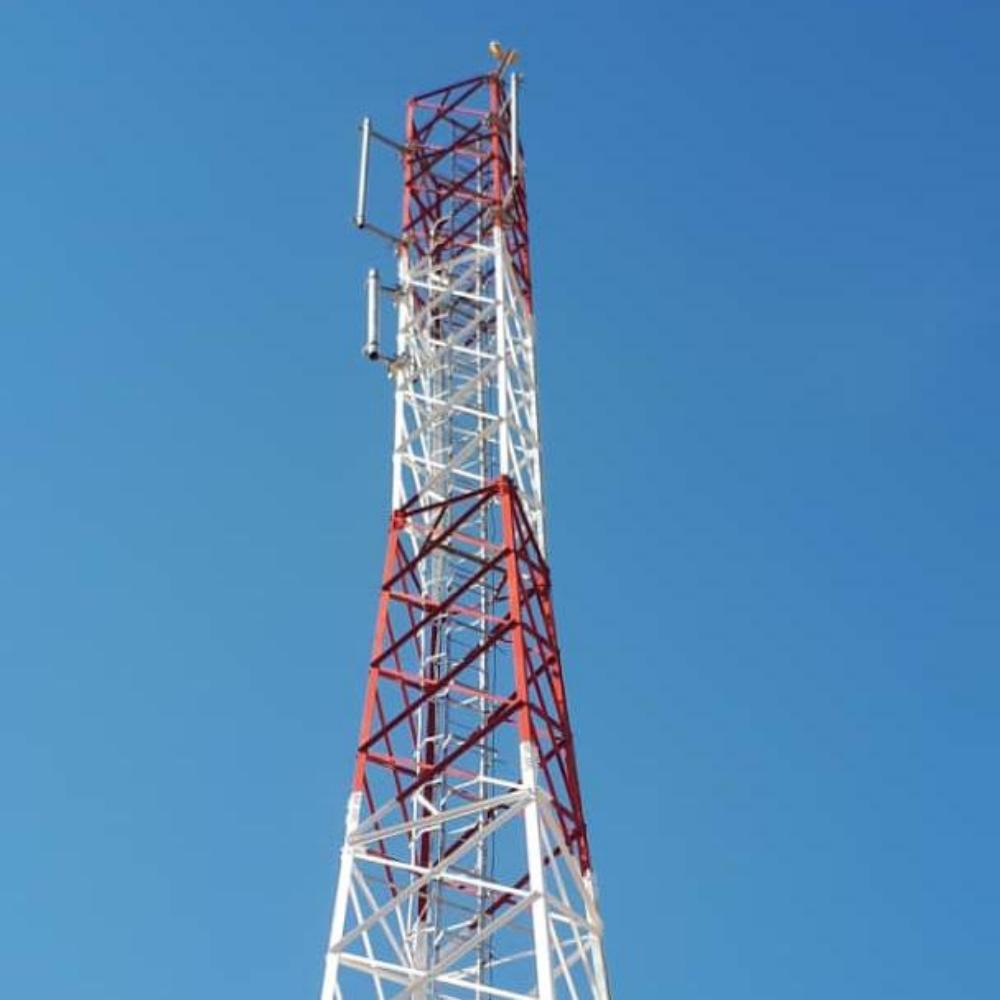
A steel angular tower relies on a precise lattice framework. Manufacturers construct this framework using hot-rolled angle steel. These components are commonly known as L-profiles. Engineers design these structures to use bolted connections. They avoid extensive field welding. Bolted joints provide greater flexibility during installation. They also eliminate the need for specialized welding equipment on remote sites.
The load distribution mechanics rely on structural geometry. You will typically see three-legged or four-legged designs. This geometry transfers torsional forces directly down to the foundational anchors. Wind loads hit the tower face. The cross-bracing members absorb this stress. They distribute it evenly across the entire frame. This prevents any single steel member from buckling under pressure.
Material efficiency defines this architectural approach. The open-web lattice design minimizes wind resistance. We measure this efficiency through the drag coefficient. An open lattice catches significantly less wind than a solid monopole. This aerodynamic advantage reduces the total volume of steel required. You need less steel per meter of elevation. Less raw material translates directly into a more efficient structural footprint. You achieve massive carrying capacity without excessive dead weight.
Industry leaders deploy these structures across two primary sectors. Telecom operators and utility companies rely heavily on them. Each sector utilizes the structural rigidity differently. We can observe unique payload requirements for each application.
A telecom angular tower shines in macro cell site applications. These sites support immense equipment loads. Modern 4G and 5G networks require multiple heavy antennas. Operators mount large microwave dishes and heavy Remote Radio Units (RRUs). The lattice structure easily supports these asymmetrical payloads. You can mount equipment at various elevations without compromising stability.
Microwave backbone networks also depend on these structures. Point-to-point line-of-sight transmission requires high-elevation stability. Even a slight sway can disrupt a microwave signal. The four-legged lattice framework provides extreme rigidity. It meets the strict deflection limits required by microwave antennas. They maintain signal integrity even during high wind events.
Utility companies use these frameworks for high-voltage pylons. Power grids carry heavy conductive cables over long distances. High-voltage networks typically range from 110kV to over 800kV. These spans introduce immense vertical and horizontal loads. Ice accumulation on power lines adds extreme dead weight. The angular steel easily handles this combined tension.
Dead-end and angle towers represent a specialized utility application. Power lines rarely travel in a straight path. They must navigate sharp geographical turns. They also terminate at substations. These dead-end points experience immense directional pull. Engineers utilize angular steel rigidity to manage these forces. The broad base and rigid bracings prevent the tower from leaning.
Choosing between angular and tubular designs is a critical decision. Project managers must evaluate several logistical and financial variables. Both structures offer distinct advantages depending on the deployment scenario.
Angular steel is a standard, globally available rolled profile. Steel mills produce L-profiles in massive quantities. This makes manufacturing significantly cheaper. Factories do not need to roll and weld steel plates into tubes. The raw material processing costs remain low. You benefit from a highly competitive global supply chain.
Logistics often dictate infrastructure choices. Angular pieces nest closely together. This allows for flat-pack shipping. A standard shipping container can hold multiple unassembled towers. Tubular sections require heavy transport. They are bulky and awkward. Shipping tubular sections often means transporting vast amounts of "empty air." This drives up freight costs significantly.
Angular towers require basic tools for assembly. Crews use manual labor and standard torque wrenches. You bolt the pieces together on-site. This modularity is ideal for off-grid or mountainous sites. Helicopters or small trucks can deliver the individual steel members. Conversely, tubular towers demand heavy cranes. You must stack large, heavy sections. Crane access is often impossible in remote locations.
Tubular designs offer slightly lower individual member wind resistance. They also occupy a smaller physical footprint. City planners prefer them for strict urban zoning. Angular towers require larger land parcels. Their wide stance demands more ground space. However, the overall lattice structure handles massive wind shears better in open environments.
Evaluation Metric | Angular Lattice Tower | Tubular Tower |
|---|---|---|
Manufacturing Cost | Low (Standard L-profiles) | High (Rolling and welding required) |
Freight Efficiency | High (Flat-pack nesting) | Low (Ships empty air) |
Assembly Equipment | Basic tools, manual labor | Heavy cranes required |
Site Footprint | Large (Broad base stance) | Small (Compact foundation) |
Evaluating an infrastructure asset requires looking beyond the initial purchase order. You must assess upfront capital expenditure alongside long-term viability. Long-term structural health directly impacts your return on investment.
Upfront CAPEX heavily favors the angular design. Lower raw material processing costs shrink the initial budget. Optimized global shipping drastically reduces procurement spend. You pay for solid steel weight, not container volume. This allows operators to purchase more towers within the same budgetary cycle. Network expansion becomes more financially viable.
Maintenance and inspection procedures are highly efficient. Open-angle profiles allow for straightforward visual inspections. Crews can easily walk around the structure. They conduct 360-degree visual checks of corrosion and bolt integrity. Tubular structures introduce unseen risks. They trap internal moisture. Internal condensation causes hidden rust. This degradation is difficult to monitor without specialized ultrasonic equipment.
Scalability ensures long-term asset value. Telecom operators frequently upgrade networks. Modifying a steel framework to carry additional payload is straightforward. You can easily bolt on secondary reinforcement members. Strengthening a lattice leg or bracing takes minimal effort. This adaptability prevents the need for complete structural replacement when adding a new tenant.
Every engineering solution introduces specific risks. Planners must anticipate site vulnerabilities before breaking ground. Proactive mitigation prevents costly delays and long-term structural liabilities.
The broad base of a four-legged lattice tower requires space. You need a larger concrete foundation. You also need a larger land lease. This footprint can offset material savings in high-value real estate areas. Urban land is expensive. Rural deployments rarely face this issue. You must calculate land lease rates during the planning phase.
The step-like nature of lattice bracings presents a security risk. Unauthorized individuals find them easier to climb. You must implement strict perimeter security. Anti-climb guards are mandatory. Fencing and surveillance cameras help deter vandalism. Equipment theft at the base station is a common threat.
Lattice structures rely on thousands of nuts and bolts. This introduces the risk of vibrational loosening. Wind constantly vibrates the steel members. Over time, poorly secured bolts will back out. You require rigorous quality assurance during installation. Crews must use torque marking. Scheduled maintenance checks must verify bolt tension.
Conduct thorough soil testing before designing the broad foundation pad.
Install anti-climb physical barriers at least three meters above ground level.
Require installers to mark tightened bolts with brightly colored torque paint.
Schedule routine drone inspections to check upper-level bolt marks remotely.
Buying infrastructure requires stringent technical specifications. A vague purchase order leads to catastrophic structural failures. You must demand transparency from your manufacturing partners.
Compliance & Design Standards: Verify all structural modeling against local building codes. Telecom towers must typically meet TIA-222-H standards. Power transmission pylons generally follow ASCE 10-15 guidelines. Demand engineering calculation reports.
Material Grades: Ensure transparent sourcing of high-yield strength steel.Request mill test certificates for every batch.
Corrosion Protection: Mandate strict adherence to hot-dip galvanization standards. ASTM A123 is the benchmark. Every individual angle and gusset plate must undergo coating post-fabrication. This guarantees a thirty-to-fifty-year lifespan in harsh environments.
Vendor Shortlisting Logic: Prioritize quality assurance over raw low-bid pricing. Select manufacturers providing complete traceably tested prototypes. Demand pre-assembly QA reports. Ensure they provide comprehensive, itemized packing lists to prevent missing parts on-site.
Common mistakes occur during the bidding phase. Buyers often ignore the galvanization thickness. They accept cheaper electro-plating instead of hot-dip galvanizing. This mistake leads to rapid rust in coastal environments. Always verify the zinc coating micron thickness before signing contracts.
The steel angular tower is not a legacy structure. It remains the most cost-effective solution for heavy-load projects. It is logistically sensible and structurally adaptable. Remote deployments and high-elevation sites benefit immensely from its modularity. You bypass heavy crane requirements while maintaining extreme load capacities. Urban constraints may favor tubular designs, but harsh environments demand lattice resilience.
We recommend engaging structural engineers early in your planning phase. Ask them to run a comprehensive load-case analysis. Request a technical specification sheet tailored to your specific site footprint. Account for local wind-zone requirements and future payload expansions. A well-specified framework guarantees decades of reliable operational uptime.
A: Standard telecom frameworks range from 30 to 100 meters. However, custom angular lattice structures can easily exceed 200 meters. Scalability depends entirely on the base spread and foundational engineering. Wider bases and heavier lower-leg profiles allow for extreme vertical reach.
A: A 4-legged structure offers simpler right-angle connections. It provides broader stability for heavy, symmetrical payloads. A 3-legged design saves on material weight and foundation costs. Three legs handle wind shear efficiently but carry less overall weight than four legs.
A: A standard 40-meter tower typically takes 3 to 7 days to assemble. Timelines depend heavily on site accessibility and crew experience. Ground preparation and foundation curing times are separate and require additional weeks before assembly begins.
A: Yes. Hot-dip galvanization is the industry standard for anti-corrosion. Manufacturers coat every individual angle and gusset plate post-fabrication. They submerge the steel in molten zinc. This ensures complete elemental protection, even inside pre-drilled bolt holes.


